

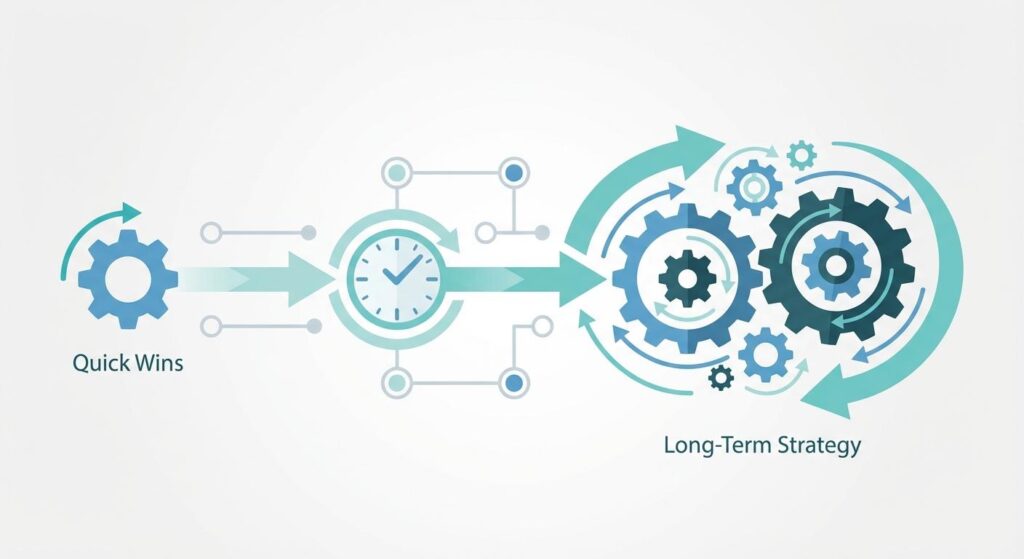


























































































Healthy Living: 5 Steps to Better Work-Life Wellness


In today’s fast-paced digital landscape, integrating Healthy Living practices into our daily routines has become more crucial than ever. As professionals juggle multiple responsibilities, the boundary between work and personal life continues to blur.
Mindful time management has emerged as an essential skill for maintaining productivity while preserving mental wellbeing. This approach helps create structured workflows that align with our natural energy cycles, ultimately leading to more sustainable performance and reduced burnout.
Table of Contents
Core Tools & Requirements
To effectively implement mindful time management in your daily routine, consider these essential tools:
1. Digital time-tracking apps – Tools like Toggl, RescueTime, or Forest help monitor how you spend your working hours
2. Calendar blocking software – Google Calendar or Microsoft Outlook for scheduling focused work sessions
3. Noise-canceling headphones – Create distraction-free environments anywhere
4. Meditation apps – Headspace, Calm, or Insight Timer support mental clarity breaks
5. Physical planner or journal – Analog tools for daily priority setting and reflection
6. Ergonomic workspace setup – Proper chair, desk, and monitor positioning for physical Wellness
Beginners can start with just a basic timer and journal before investing in premium solutions.
Implementation Timeline / Learning Curve

Adopting mindful time management typically follows this progression:
Weeks 1-2: Initial awareness phase; simply observing current habits and identifying energy patterns
Weeks 3-4: Experimental phase; testing different scheduling approaches
Months 2-3: Refinement phase; establishing personalized routines that work consistently
Months 4-6: Integration phase; time management becomes more intuitive and requires less conscious effort
Most practitioners report noticeable improvements in focus and productivity within the first month, with sustainable habits forming by the 90-day mark.
Step-by-Step Implementation Guide

1. Conduct a time audit – Track how you currently spend your working hours for one week
2. Identify your peak energy periods – Note when you naturally feel most focused
3. Design your ideal day template – Schedule challenging tasks during high-energy periods
4. Implement the Pomodoro Technique – Work in focused 25-minute intervals followed by 5-minute breaks
5. Create transition rituals – Develop small habits that signal shifts between different types of work
6. Practice regular physical movement – Incorporate short movement breaks to maintain Wellness throughout the day
7. Establish digital boundaries – Set specific times for checking email and notifications
8. Review and adjust weekly – Reflect on what’s working and refine your approach to mindful time management
Key Benefits & Advantages
– Reduced mental fatigue – Working with your natural rhythms preserves cognitive resources
– Improved decision quality – Scheduled deep work periods enhance critical thinking
– Decreased stress levels – Clear boundaries prevent work from consuming personal time
– Enhanced creativity – Regular breaks allow for incubation of ideas and fresh perspectives
– Greater sense of accomplishment – Completing defined tasks creates momentum and satisfaction
Tips, Use Cases & Best Practices
– For remote workers: Establish a morning ritual that replaces your former commute time
– For managers: Block “office hours” for team availability while protecting focused work time
– For creative professionals: Schedule “inspiration hours” for exploration without pressure to produce
– For parents: Coordinate high-focus work during children’s most predictable schedule periods
– For night owls: Consider negotiating flexible hours that align with your natural productivity peaks
Common Mistakes to Avoid

– Unrealistic scheduling – Overestimating how much can be accomplished in a day
– Neglecting buffer time – Failing to account for transitions between tasks
– Context switching – Attempting to multitask rather than batching similar activities
– Ignoring physical needs – Skipping meals or movement breaks in pursuit of productivity
– All-or-nothing thinking – Abandoning the system after inevitable disruptions occur
Maintenance, Optimization & Long-Term Habits
Sustaining mindful time management requires regular system maintenance:
– Conduct monthly reviews of your scheduling approach
– Experiment with seasonal adjustments as daylight and energy patterns shift
– Create accountability through a productivity partner or coach
– Document successful workflows for easy reference during stressful periods
– Recognize when your system needs refreshing to prevent staleness
Conclusion
Mindful time management represents a personalized journey toward aligning your work habits with your natural rhythms and wellbeing needs. By implementing the frameworks outlined above, you can create sustainable productivity while honoring your need for Healthy Living. Remember that the goal isn’t perfect efficiency but rather a balanced approach that supports both professional achievements and personal thriving. Consider how these practices might enhance your daily routines and experiment with integrating them gradually for lasting change.
FAQs
How can I practice mindful time management when my schedule is unpredictable?
Focus on creating “bookend” rituals for your day that remain consistent, even when the middle hours vary. Having stable morning and evening routines provides continuity.
Will mindful time management work for people with ADHD or focus challenges?
Yes, though modifications may be helpful. Consider shorter work intervals, more frequent breaks, and external accountability structures like body doubling.
Can mindful time management techniques be applied to family life?
Absolutely. Many families benefit from regular planning sessions, visual schedules, and designated focus time for different family members.
How do I handle colleagues or clients who don’t respect my new boundaries?
Start with clear communication about your availability. Consistently redirect interruptions to your designated availability times, and demonstrate the productivity benefits that result.
What’s the best way to recover when I fall off track with my system?
Approach with self-compassion, analyze what triggered the disruption, adjust any unrealistic expectations, and simply begin again with your next work session.