



























































































SEO Focus Keyword Strategy: 5 Proven Tactics to Rank Fast


In the increasingly competitive digital landscape, businesses face mounting challenges to achieve visibility in search results. With Google’s algorithms becoming more sophisticated and competitors investing heavily in content, standing out requires a strategic approach rather than random tactics. Developing a comprehensive SEO focus keyword strategy has become essential for brands seeking sustainable organic growth.
This methodical approach helps businesses identify high-value search terms and create content that satisfies both search engines and user intent. Equally important is proper keyword optimization throughout your content to ensure search engines properly understand and rank your pages.
Table of Contents
Core Tools & Requirements
To implement an effective SEO strategy, you’ll need these essential tools:
- Keyword Research Platforms: SEMrush, Ahrefs, or Moz for discovering valuable search terms
- Google Search Console: For understanding how Google views your site and which queries drive traffic
- Google Analytics: To track user behavior and conversion metrics
- Content Optimization Tools: Clearscope, Surfer SEO, or Frase for content optimization
- SERP Analysis Tools: To understand what’s currently ranking and why
- Technical SEO Audit Tools: Screaming Frog or Sitebulb to identify technical issues
- Rank Tracking Software: To monitor position changes over time
Beginners can start with free tools like Google Keyword Planner, Google Search Console, and Google Analytics, while more advanced SEOs will benefit from paid solutions offering deeper insights.
Implementation Timeline / Learning Curve

Understanding realistic timelines for SEO implementation helps set proper expectations:
- Initial Research & Strategy Development: 2-4 weeks
- On-Page Optimization: 1-3 months depending on site size
- Content Creation & Optimization: Ongoing process
- Initial Results: 3-6 months for new content to gain traction
- Significant Improvements: 6-12 months for competitive keywords
- Sustainable Growth: 12+ months of consistent effort
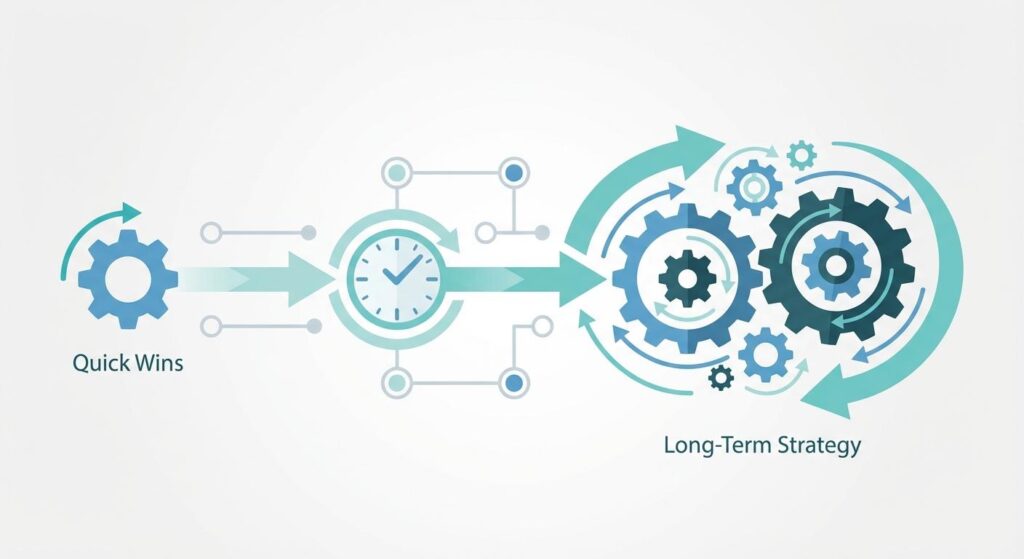
While some quick wins may appear within weeks (like fixing technical issues), meaningful organic growth typically requires at least 6 months of consistent implementation. The most successful strategies balance short-term optimizations with long-term authority building.
Step-by-Step Implementation Guide

1. Conduct Comprehensive Keyword Research:
* Identify seed keywords in your industry
* Expand using tools to discover related terms and questions
* Analyze search volume, competition, and intent
* Create a SEO focus keyword strategy document organizing terms by priority
2. Map Keywords to User Intent:
* Categorize keywords by informational, navigational, commercial, or transactional intent
* Align content types with appropriate intent stages
3. Analyze Top-Ranking Competitors:
* Study content structure, depth, and formatting
* Identify content gaps you can fill
* Note linking patterns and authority signals
4. Create Content Briefs:
* Develop detailed outlines based on SERP analysis
* Include target keywords, questions to answer, and subtopics
* Apply proper keyword optimization guidelines for writers
5. Optimize Existing Content:
* Audit current rankings and identify improvement opportunities
* Update outdated information and expand thin content
* Enhance readability and user experience elements
6. Implement Strong Internal Linking:
* Connect related content to build topical clusters
* Use descriptive anchor text strategically
* Create hub pages for important topics
7. Track Performance and Iterate:
* Monitor rankings, traffic, and engagement metrics
* Analyze user behavior to identify improvement areas
* Regularly update content based on performance data
Key Benefits & Strategic Advantages
A well-executed SEO strategy delivers multiple advantages:
- Sustained Organic Traffic Growth: Reduce dependence on paid channels
- Improved Conversion Rates: Properly aligned content meets user expectations
- Enhanced Brand Authority: Comprehensive coverage builds trust
- Algorithm Resilience: Less vulnerability to updates when following best practices
- Competitive Differentiation: Stand out with superior content quality and depth
- Compounding Returns: Content continues delivering value over time
- Lower Customer Acquisition Costs: Organic traffic typically converts at higher rates than paid
Advanced Optimization & GEO Techniques
Take your strategy further with these advanced approaches:
- Semantic Clustering: Organize content around related concepts, not just keywords
- Entity Optimization: Highlight important people, places, concepts, and brands
- Natural Language Processing Alignment: Structure content for AI understanding
- Topic Modeling: Build comprehensive coverage of subject areas
- Content Refreshing Protocol: Systematically update existing content
- Featured Snippet Optimization: Structure content to capture position zero
- SERP Feature Targeting: Optimize for specific search features relevant to your keywords
Common Mistakes to Avoid

Steer clear of these common pitfalls:
- Keyword Cannibalization: Creating multiple pages targeting the same term
- Ignoring Search Intent: Misaligning content type with user needs
- Thin Content: Publishing shallow content that doesn’t fully address the topic
- Poor Internal Linking: Missing opportunities to connect related content
- Neglecting Technical SEO: Allowing issues to undermine content quality
- Inconsistent Publishing: Failing to maintain content momentum
- Ignoring Analytics: Not using data to guide optimization decisions
Performance Tracking & Long-Term Scaling
Monitor these key performance indicators:
- Organic Sessions: Track overall traffic from search
- Average Position: Monitor ranking improvements
- Click-Through Rate: Analyze SERP performance
- Page Depth & Time on Site: Measure engagement quality
- Conversion Rate: Track goal completions
- Keyword Visibility: Monitor ranking distribution
- Content Gaps: Identify new opportunities
Use these metrics to guide your ongoing optimization efforts and content development priorities.
Conclusion
Developing an effective SEO focus keyword strategy is no longer optional for businesses seeking sustainable online growth. By following a systematic approach to research, implementation, and measurement, you can create content that consistently attracts qualified traffic and builds lasting authority. Remember that successful keyword optimization requires balancing search engine requirements with user experience excellence. Start implementing these strategies today, measure the results, and continually refine your approach based on performance data.
FAQs
How long does it typically take to see rankings improve with a new SEO strategy?
For new websites, expect 6-9 months before seeing significant traction for competitive terms. Established sites may see improvements within 3-4 months when implementing a comprehensive strategy. Some low-competition keywords can show movement within weeks, while highly competitive terms may take 12+ months of consistent effort.
How do I determine the right keyword difficulty to target for my site’s authority level?
Analyze your current rankings to establish a baseline. If your domain authority (DA) is under 30, focus primarily on keywords with difficulty scores below 30. Sites with DA 30-50 can target moderate-difficulty keywords (30-60), while high-authority sites (DA 50+) can compete for more difficult terms. Always include a mix of difficulty levels in your strategy.
What’s the difference between traditional keyword research and semantic SEO?
Traditional keyword research focuses on specific search terms and their variations, while semantic SEO considers the broader topic ecosystem, related concepts, and entity relationships. Semantic SEO aims to comprehensively cover a subject area rather than just targeting isolated keywords, which aligns better with modern search engine capabilities.
How many internal links should I include in each article?
There’s no fixed number, but aim for 3-5 relevant internal links per 1,000 words of content. Focus on quality over quantity by linking to genuinely related content using descriptive anchor text. Create a logical content hierarchy with pillar pages linking to subtopic pages and related content cross-linking where appropriate.
Should I optimize existing content or focus on creating new content first?
Begin by optimizing your most valuable existing content—pages that already rank on page two or early page three, have conversion potential, or address high-value topics. This typically delivers faster results than new content. Then develop a parallel strategy of creating new content for untapped opportunities while continuing to refresh existing assets regularly.