



























































































Keyword Intent Optimization: 4 Winning Tactics


In today’s fiercely competitive digital landscape, simply targeting high-volume keywords is no longer enough to secure top positions in search engine results. Websites that truly dominate search rankings understand the critical importance of aligning content with user intentions. keyword intent optimization has emerged as the cornerstone strategy that separates mediocre SEO campaigns from exceptionally successful ones. By understanding not just what users are searching for, but why they’re searching, marketers can develop content that precisely matches search engine algorithms’ increasingly sophisticated evaluation of relevance. This approach requires comprehensive search intent analysis to decode the underlying motivations behind specific queries.
Table of Contents
Core Tools & Requirements
To implement an effective keyword intent mapping strategy, you’ll need several essential tools:
1. Keyword Research Platforms: SEMrush, Ahrefs, or Moz for comprehensive keyword discovery and competitor analysis
2. Analytics Dashboards: Google Analytics 4 for tracking user behavior and content performance
3. Search Console Integration: For monitoring actual search impressions, clicks, and ranking positions
4. Intent Classification Tools: Clearscope, Frase, or MarketMuse for content optimization and semantic analysis
5. SERP Analysis Tools: SE Ranking or Serpstat to understand what content types are currently ranking
6. Content Planning Systems: ClickUp, Asana, or dedicated content calendars for systematic implementation
7. NLP Analysis Tools: IBM Watson or Google NLP API for entity recognition and semantic relationship mapping
Both beginners and advanced SEO practitioners can leverage these tools, though beginners might start with Google’s free offerings before investing in premium solutions.
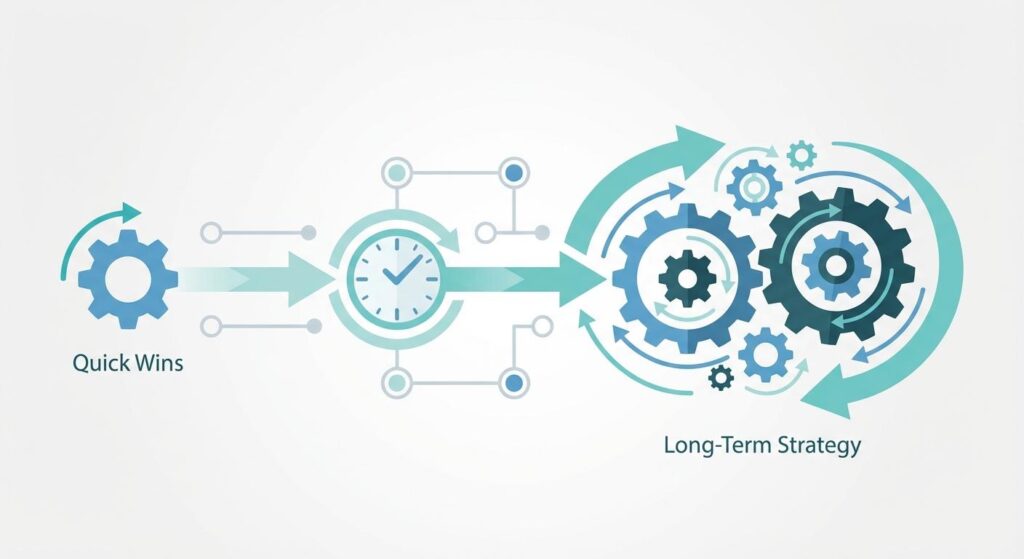
Implementation Timeline / Learning Curve

Implementing a comprehensive keyword intent mapping strategy isn’t an overnight process. Here’s what to expect:
Short-term (1-3 months):
– Initial keyword intent categorization and content audit
– First-round optimization of high-priority pages
– Early ranking fluctuations as search engines reprocess your content
Medium-term (3-6 months):
– Visible improvements for long-tail, low-competition terms
– Growing topical authority in your primary subject areas
– Measurable increases in organic traffic for optimized pages
Long-term (6-12 months):
– Sustainable ranking improvements across competitive terms
– Established content clusters with strong internal linking
– Predictable traffic patterns and conversion pathways
The steepest part of the learning curve involves mastering intent classification and developing systematic processes for content optimization that can be scaled across your entire site.
Step-by-Step Implementation Guide

1. Comprehensive Keyword Discovery
– Use multiple tools to identify all potential keywords related to your business
– Group keywords by topical relevance and search volume
– Analyze SERP features to understand Google’s interpretation of intent
2. Intent Classification System
– Categorize keywords into informational, navigational, commercial, and transactional buckets
– Document user journey stages associated with each intent type
– Create content templates optimized for each intent category
3. Competitive Intent Analysis
– Analyze top-ranking pages for your target keywords
– Identify content gaps and opportunity areas
– Determine what intent signals competitors are leveraging successfully
4. Content Structure Optimization
– Develop comprehensive content briefs based on search intent analysis
– Create intent-specific heading structures and content organization
– Implement entity optimization to enhance semantic relevance
5. Strategic Internal Linking
– Connect related content based on user journey mapping
– Create topical clusters with clear pillar and supporting content
– Use keyword intent optimization principles to guide anchor text selection
6. Performance Tracking Framework
– Establish KPIs specific to each intent category
– Create dashboards to monitor ranking changes and traffic patterns
– Implement regular content audits and refresh cycles
Key Benefits & Strategic Advantages
Mastering keyword intent mapping delivers several competitive advantages:
1. Higher Conversion Rates: Content aligned with user intent naturally guides visitors toward desired actions
2. Improved Search Visibility: Search engines reward content that satisfies user queries completely
3. Reduced Bounce Rates: Visitors find exactly what they’re looking for, increasing engagement
4. Enhanced Topical Authority: Comprehensive coverage of topics signals expertise to search algorithms
5. Algorithm-Proof Rankings: Intent-optimized content tends to maintain rankings through algorithm updates
6. More Featured Snippets: Properly structured content has higher chances of earning position zero placements
7. Better Resource Allocation: Focus content creation efforts on high-impact opportunities
Advanced Optimization & GEO Techniques
Take your strategy to the next level with these sophisticated approaches:
1. Semantic Vector Analysis: Use NLP tools to map semantic relationships between keywords and concepts
2. Entity Priority Framework: Identify and emphasize entities that Google associates with your topic
3. Query Refinement Pathways: Anticipate follow-up questions users might have and address them proactively
4. Intent Transition Mapping: Create content that guides users naturally from informational to transactional intent
5. SERP Feature Optimization: Structure content specifically to earn rich results like featured snippets or knowledge panels
6. Content Depth Calibration: Adjust content depth based on competitive analysis of successful pages
7. Generative AI Readiness: Structure content to perform well in both traditional search and AI-generated responses
Common Mistakes to Avoid

Even experienced SEO professionals sometimes fall into these traps:
1. Intent Misalignment: Creating content that doesn’t match what users actually want
2. Format Mismatch: Ignoring the content formats that currently dominate SERPs for your target terms
3. Excessive Keyword Focus: Prioritizing keyword density over satisfying user needs
4. Neglecting Entity Relationships: Missing important topical connections that search engines use to evaluate relevance
5. Ignoring Query Refinement: Failing to address the common follow-up questions users have
6. Static Content Approach: Not updating content as user intent evolves over time
7. Siloed Optimization: Optimizing individual pages without considering the broader content ecosystem
Performance Tracking & Long-Term Scaling
To sustain and scale your keyword intent mapping strategy:
1. Intent-Specific KPI Framework: Track different metrics based on the intent category of content
2. Regular SERP Analysis Updates: Monitor how Google’s interpretation of intent evolves
3. Content Refresh Calendar: Systematically update content based on performance data
4. Competitive Gap Analysis: Continuously identify new intent-based opportunities
5. User Journey Optimization: Refine internal linking and user paths based on analytics data
6. Authority Building Plan: Develop a systematic approach to deepening topical authority
7. Scalable Processes: Document and standardize your approach for team implementation
Conclusion
In today’s sophisticated search landscape, understanding and applying keyword intent optimization principles is no longer optional—it’s essential for sustainable organic growth. By systematically mapping user intentions to content strategy, you create a robust foundation for long-term SEO success that can withstand algorithm changes and competitive pressures. Remember that search intent analysis is not a one-time effort but an ongoing process of refinement and adaptation. The organizations that commit to truly understanding what users want, rather than simply what keywords they use, will continue to dominate the organic search landscape.
FAQs
How long does it take to see ranking improvements from intent optimization?
Most websites begin seeing measurable improvements within 4-8 weeks for long-tail keywords and 3-6 months for more competitive terms. The timeline depends on your site’s existing authority, competitive landscape, and implementation thoroughness.
How can I determine keyword difficulty in relation to search intent?
Analyze the current SERP features, domain authority of ranking sites, content comprehensiveness, and user engagement signals. Keywords with mixed intent (where Google shows diverse result types) often present greater optimization opportunities.
What role does semantic SEO play in intent optimization?
Semantic SEO ensures your content covers related concepts, entities, and questions that comprehensively address user intent. It helps search engines understand the depth and breadth of your content, leading to higher relevance scores.
How should internal linking strategy change based on keyword intent?
Structure internal links to guide users along their journey from informational to transactional content. Use anchor text that reflects the user’s stage in the decision process rather than simply matching keywords.
What are the best practices for optimizing content for both search engines and AI systems?
Focus on comprehensive topic coverage, clear structure with descriptive headings, entity-rich content, explicit answers to common questions, and authoritative information sourcing. This approach satisfies both traditional search algorithms and newer AI-based systems.