























































































Agentic AI Risk Management: 5 Must-Have Safeguards


The enterprise landscape is experiencing a seismic shift as Artificial Intelligence technologies rapidly evolve from experimental concepts to mission-critical business systems. Organizations face unprecedented competitive pressure to accelerate their digital transformation initiatives, with AI serving as both catalyst and cornerstone of modern business strategy.
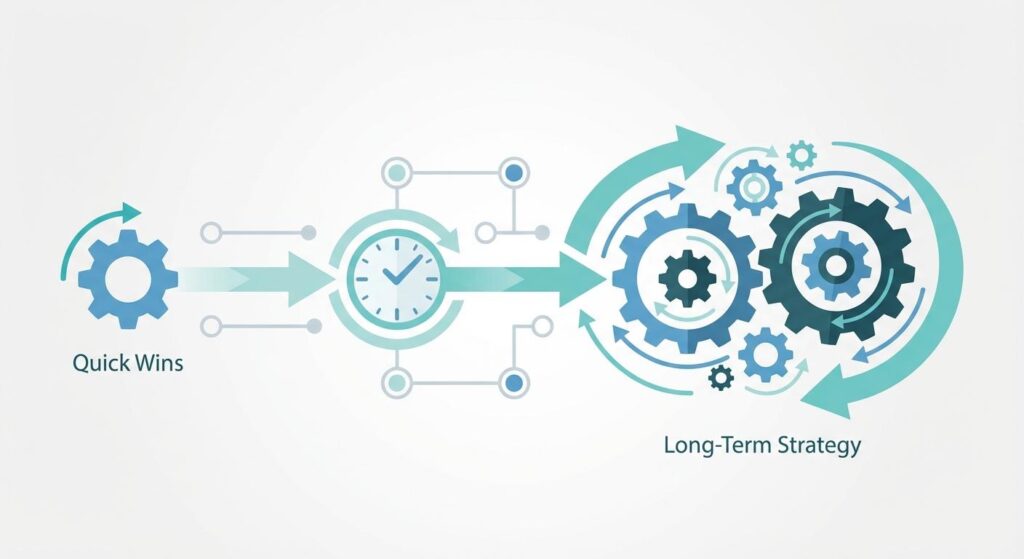
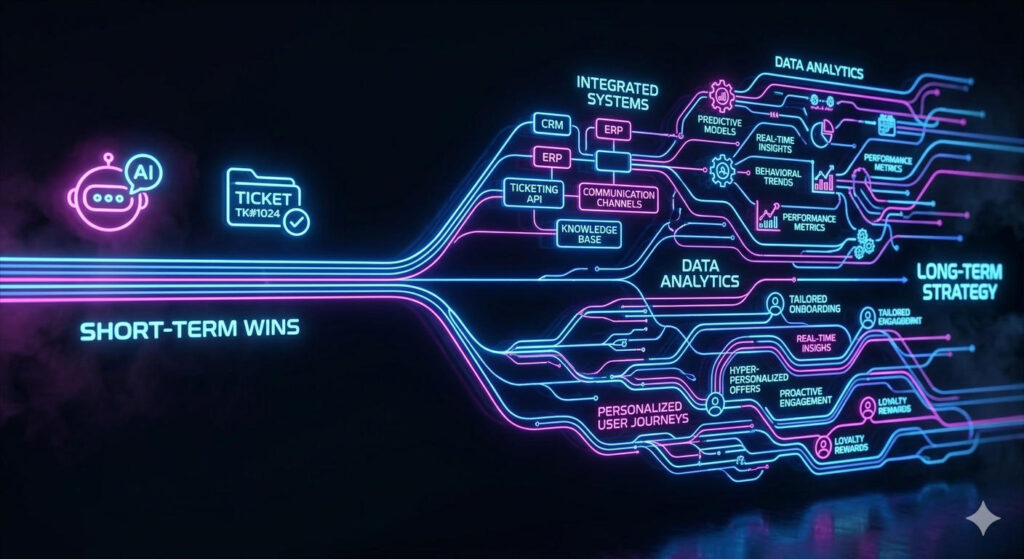
The integration of comprehensive Artificial Intelligence and enterprise digital transformation requires a structured approach that balances innovation with governance, technical feasibility with business outcomes, and short-term wins with long-term strategic value. Forward-thinking enterprises recognize that AI isn’t merely another technology implementation but represents a fundamental reimagining of how organizations create value, serve customers, and maintain competitive advantage.
Table of Contents
Core AI Tools & Infrastructure
Successful enterprise AI initiatives depend on robust technological foundations including:
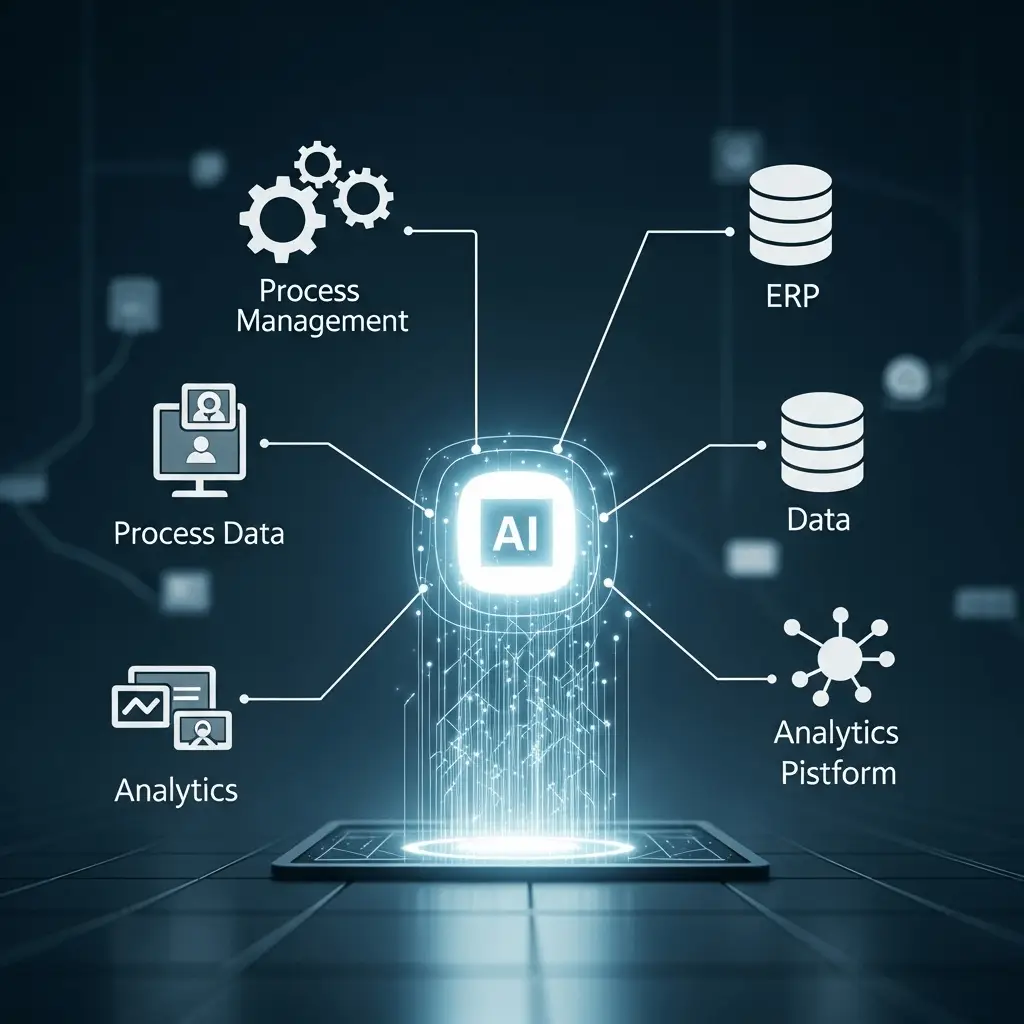
– Enterprise AI Platforms: Unified environments for model development, deployment, and management with centralized governance controls
– Analytics Infrastructure: Advanced data processing capabilities supporting both traditional analytics and machine learning workflows
– Cloud Architecture: Scalable computing resources enabling flexible processing and storage requirements
– AI governance framework: Comprehensive policies, procedures and controls ensuring ethical, transparent and compliant AI operations
– Automation Tools: Orchestration systems connecting AI capabilities to business processes and workflows
– Data Architecture: Unified data strategies enabling consistent access to high-quality information assets
Effective implementation requires careful orchestration of these components while maintaining alignment with business objectives and organizational readiness.
Implementation Timeline & Enterprise Adoption Curve

Enterprise AI adoption typically follows a maturity curve rather than a big-bang implementation. Organizations should establish realistic timelines:
1. Discovery Phase (3-6 months): Identify high-impact use cases and establish baseline capabilities
2. Pilot Implementation (6-12 months): Deploy controlled AI experiments with clear success metrics
3. Operational Scaling (12-24 months): Expand successful pilots across business units with governance
4. Enterprise Integration (24+ months): Embed AI capabilities into core business processes and decision systems
This phased approach balances immediate value delivery with the need for structural transformation and capability building.
Step-by-Step Enterprise AI Implementation Framework

Executing Artificial Intelligence and enterprise digital transformation requires a methodical approach:
1. Strategic Assessment: Evaluate organizational readiness, data maturity, and technical capabilities
2. Use-Case Prioritization: Identify high-impact opportunities based on business value, feasibility, and strategic alignment
3. Data Foundation: Establish data governance, quality standards, and integration patterns
4. agentic AI risk management: Develop comprehensive risk controls and governance protocols
5. Capability Development: Build technical expertise and establish centers of excellence
6. Solution Deployment: Implement AI solutions following agile methodologies with continuous feedback
7. Performance Measurement: Track impact against established KPIs and business objectives
This framework ensures alignment between AI initiatives and broader digital transformation goals while maintaining governance and control.
Strategic Benefits for Enterprise Organizations
Well-executed AI initiatives deliver multidimensional value:
– Operational Excellence: Automation of routine processes reduces costs while improving consistency
– Decision Intelligence: Enhanced analytics capabilities enable more informed, data-driven decisions
– Customer Experience: Personalized interactions and predictive service models improve satisfaction
– Innovation Acceleration: AI-powered R&D processes compress development timelines
– Market Responsiveness: Predictive intelligence enables faster adaptation to market changes
– Workforce Augmentation: AI tools enhance employee capabilities and productivity
– Cost Optimization: Intelligent resource allocation improves operational efficiency
These benefits compound over time as AI capabilities mature and become more deeply integrated with business operations.
Advanced GEO & Semantic Optimization for AI Content
For organizations deploying AI-driven content systems, advanced optimization strategies include:
– Entity Recognition Architecture: Structured tagging of content assets to enhance discoverability
– Intent Mapping: Alignment of content with specific user needs and decision journeys
– Semantic Layering: Enrichment of content with contextual metadata and related concepts
– Knowledge Graph Integration: Connection of content assets within comprehensive knowledge structures
– Multi-modal Content Strategy: Coordinated deployment across text, visual, and interactive formats
These approaches enhance content performance across both traditional and AI-powered distribution channels.
Enterprise AI Mistakes to Avoid

Common pitfalls in enterprise AI implementation include:
– Technology-First Thinking: Implementing AI without clear business objectives
– Inadequate Data Foundations: Neglecting data quality, governance, and integration requirements
– Governance Deficits: Failing to establish ethical guidelines and risk controls
– Capability Gaps: Underestimating skills requirements and change management needs
– Siloed Implementation: Deploying AI solutions in isolation rather than as part of an integrated strategy
– ROI Ambiguity: Lacking clear metrics and measurement frameworks
Avoiding these mistakes requires balanced attention to technology, governance, people, and process considerations.
Performance Measurement & AI ROI Tracking
Effective AI initiatives require robust measurement frameworks including:
– Business Impact Metrics: Revenue growth, cost reduction, customer retention
– Operational Indicators: Process efficiency, error reduction, cycle time improvement
– Technical Performance: Model accuracy, inference speed, data utilization
– Adoption Metrics: User engagement, feature utilization, feedback sentiment
– Strategic Alignment: Contribution to enterprise transformation objectives
These metrics should be tracked through dedicated dashboards with regular executive reporting.
Conclusion
Artificial Intelligence and enterprise digital transformation represent an unprecedented opportunity for organizational reinvention. Success requires more than technological implementation—it demands strategic vision, cultural alignment, and disciplined execution. Organizations must develop comprehensive AI governance framework capabilities while maintaining focus on measurable business outcomes. By approaching AI transformation as a strategic journey rather than a tactical project, enterprises can unlock sustainable competitive advantage in an increasingly AI-powered business landscape.
FAQs
How long does a typical enterprise AI transformation take?
Enterprise AI transformations typically require 3-5 years for comprehensive implementation, though value delivery begins with initial use cases within 6-12 months through a phased approach.
What governance structures are essential for enterprise AI?
Critical governance elements include ethics committees, model review processes, data governance protocols, bias detection frameworks, and agentic AI risk management systems.
How can enterprises measure the ROI of AI investments?
AI ROI should combine direct metrics (cost savings, revenue generation) with indirect benefits (improved decision quality, risk reduction) while accounting for capability development and competitive positioning.
What integration challenges typically arise in enterprise AI deployment?
Common integration challenges include legacy system compatibility, data silos, API limitations, security requirements, and process redesign needs across organizational boundaries.
How should enterprises balance centralized vs. distributed AI capabilities?
Successful organizations typically implement a hub-and-spoke model with centralized governance, shared infrastructure and standards while enabling business-unit autonomy in use-case development and implementation.