


















































































































Generative AI Trends 2025: 7 Game-Changing Predictions


The rapid evolution of Artificial Intelligence has fundamentally changed how enterprise organizations approach digital transformation. As competitive pressures intensify, companies are accelerating their AI adoption timelines to remain relevant in increasingly automated markets. Today’s enterprise leaders recognize that piecemeal AI implementations no longer suffice; what’s required is comprehensive integration of generative AI trends 2025 into core business operations.
This transformation extends beyond technology adoption to encompass strategic realignment, workflow redesign, and organizational culture shifts. The landscape of AI industry trends 2025 demonstrates that organizations failing to develop robust enterprise AI capabilities risk significant competitive disadvantage in the coming years.
Table of Contents
Core AI Tools & Infrastructure
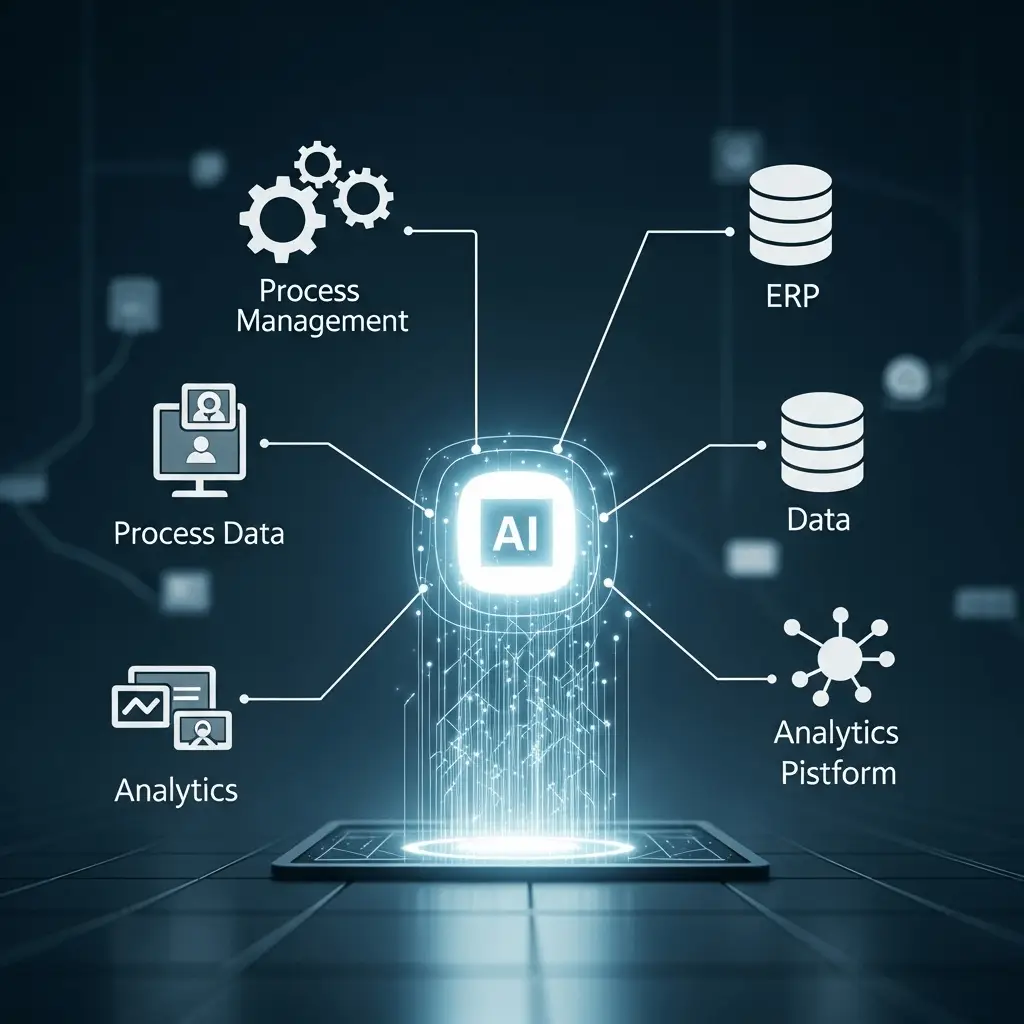
Enterprise AI deployment demands sophisticated technological infrastructure that extends beyond basic automation tools. Organizations need integrated platforms that support both predictive analytics and generative capabilities, often through hybrid architectures combining cloud and edge computing resources. Key components include:
– Enterprise-grade AI development platforms with governance controls
– Scalable cloud infrastructure with dedicated AI/ML operations capabilities
– Data lakes and warehouses supporting real-time analytics
– MLOps frameworks for model deployment and monitoring
– Integration middleware connecting AI systems with legacy infrastructure
– Advanced cybersecurity protocols for AI-specific vulnerabilities
Most enterprises find that successful AI implementation requires modernizing underlying data architecture to support the velocity and volume requirements of advanced machine learning models.
Implementation Timeline & Enterprise Adoption Curve

Enterprise AI adoption typically follows a predictable maturity curve rather than proceeding in a linear fashion. Organizations commonly move through distinct phases:
1. Experimentation (3-6 months): Focused on proof-of-concept projects and capability demonstration
2. Tactical Deployment (6-12 months): Implementation of specific use cases with measurable ROI
3. Strategic Integration (12-24 months): Alignment of AI initiatives with core business processes
4. Transformational Deployment (24-36 months): Fundamental business model evolution driven by AI capabilities
This timeline requires careful expectation management among stakeholders, as the most significant business impact typically emerges during the later stages of adoption.
Step-by-Step Enterprise AI Implementation Framework

Successful enterprise AI transformation requires a structured implementation methodology:
1. Organizational Readiness Assessment: Evaluate data maturity, technical capabilities, and cultural readiness
2. Strategic Alignment: Define how AI initiatives support core business objectives
3. Use Case Prioritization: Identify high-value opportunities based on impact and feasibility
4. Data Foundation Development: Establish governance frameworks and data preparation processes
5. Pilot Implementation: Deploy initial generative AI trends 2025 applications in controlled environments
6. Capability Scaling: Expand successful implementations across business units
7. Integration with Legacy Systems: Connect AI solutions with existing enterprise architecture
8. Continuous Optimization: Refine models and approaches based on performance metrics
Each step must incorporate robust AI industry trends 2025 tracking to ensure alignment with evolving technological capabilities and market expectations.
Strategic Benefits for Enterprise Organizations
When properly implemented, enterprise AI delivers multidimensional value across operations:
– Operational Efficiency: 30-50% reduction in process execution time through intelligent automation
– Decision Intelligence: 15-25% improvement in forecast accuracy and strategic planning
– Customer Experience Enhancement: Personalization capabilities increasing engagement by 20-40%
– Product Innovation: Accelerated development cycles reducing time-to-market by 15-30%
– Risk Management: Advanced anomaly detection reducing fraud and compliance violations by 40-60%
– Market Responsiveness: Real-time analytics enabling 25-35% faster adaptation to market shifts
These benefits compound over time as AI systems continuously learn and optimize from operational data.
Advanced GEO & Semantic Optimization for AI Content
Enterprise AI strategy must incorporate sophisticated content optimization approaches:
– Implementing entity-recognition systems to categorize and relate organizational knowledge
– Developing semantic content layers that support AI-driven information retrieval
– Creating topical authority through comprehensive internal knowledge graphs
– Maintaining content freshness protocols to ensure AI training data remains current
– Deploying schema markup to enhance machine interpretability of enterprise content
– Aligning content architecture with evolving search intent patterns
These practices ensure that both internal and external AI systems effectively interpret and leverage organizational content assets.
Enterprise AI Mistakes to Avoid
Common pitfalls undermining enterprise AI initiatives include:
– Underinvestment in data quality and governance foundations
– Failing to establish clear ROI measurement frameworks
– Deploying AI solutions without business process redesign
– Neglecting ethical considerations and compliance requirements
– Treating AI implementation as primarily a technical rather than strategic initiative
– Insufficient attention to change management and skill development
– Selecting use cases based on technological interest rather than business impact
Each of these errors significantly reduces the probability of sustainable AI adoption.
Performance Measurement & AI ROI Tracking
Effective AI implementation requires sophisticated performance monitoring across dimensions:
– Technical metrics: model accuracy, processing efficiency, system reliability
– Operational metrics: process acceleration, error reduction, resource optimization
– Business metrics: revenue impact, cost reduction, customer retention improvement
– Strategic metrics: competitive differentiation, market share changes, innovation velocity
Organizations should establish baseline measurements before implementation to accurately quantify AI-driven improvements.
Conclusion
Enterprise AI transformation represents a fundamental strategic imperative rather than a technological experiment. Organizations that systematically implement generative AI trends 2025 across core operations position themselves for sustained competitive advantage. The differentiation between market leaders and laggards increasingly correlates with AI maturity and integration sophistication. By following structured implementation frameworks and avoiding common pitfalls, enterprises can successfully navigate the complexity of AI industry trends 2025 to achieve transformative business outcomes that extend well beyond initial implementation costs.
FAQs
What is a realistic timeline for enterprise-wide AI transformation?
Most organizations require 24-36 months to achieve comprehensive AI transformation, though value realization begins with initial use cases in 3-6 months. The timeline varies based on organizational data maturity, technical debt, and leadership commitment.
How should enterprises approach AI governance?
Effective AI governance combines technical controls, policy frameworks, and organizational oversight. Critical elements include model documentation, bias testing protocols, explainability requirements, and clear accountability structures for AI-driven decisions.
What ROI metrics best capture AI implementation success?
The most effective ROI frameworks combine efficiency metrics (cost reduction, time savings) with growth metrics (revenue expansion, market share) and innovation indicators (new product development, capability enhancement) to provide a comprehensive view of AI impact.
How do integration challenges differ between legacy systems and AI platforms?
Legacy integration challenges center on data accessibility, synchronization latency, and architectural compatibility. Successful integration typically requires middleware layers that normalize data flows and manage translation between modern AI requirements and traditional system capabilities.
What organizational capabilities are essential for long-term AI scalability?
Sustainable AI scaling depends on developing robust data engineering capabilities, implementing MLOps practices, establishing cross-functional AI governance, creating continuous learning processes, and building internal AI literacy across the organization.