enterprise AI strategy 2025: 5 Must-Do Steps for Success
Luffygoo / 5 months
October 13, 2025
0
5 min read
In today’s rapidly evolving business landscape, organizations face unprecedented pressure to leverage Artificial Intelligence capabilities or risk falling behind competitors. The integration of AI technologies has moved beyond experimental phases into mission-critical operational systems, with forward-thinking companies developing a comprehensive enterprise AI strategy 2025 to maintain competitive advantage. This shift represents more than technological adoption—it signifies fundamental digital transformation that restructures how enterprises capture value, serve customers, and optimize operations.
Core AI Tools & Infrastructure
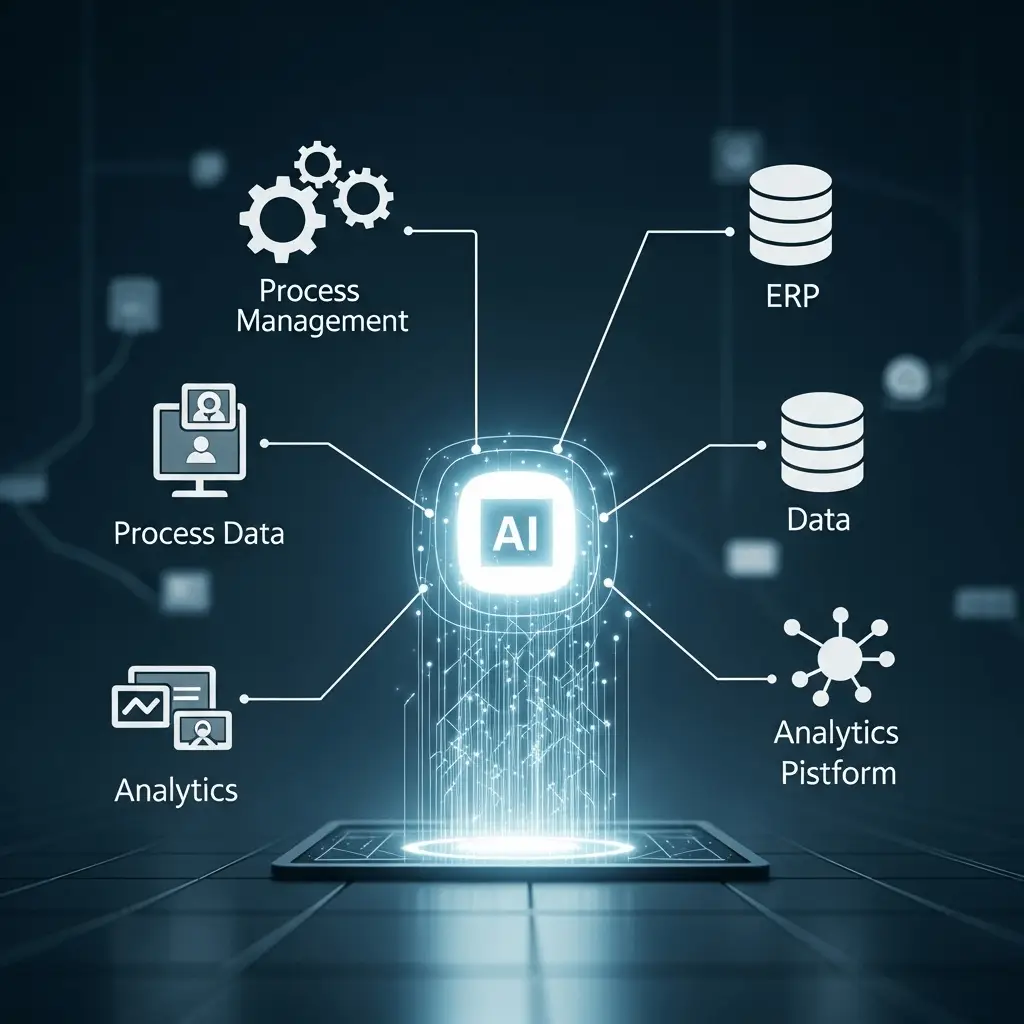
The foundation of successful enterprise AI implementation requires robust technological infrastructure. Organizations must evaluate their existing systems while planning strategic investments across multiple layers:
– AI Platform Selection: Enterprise-grade platforms that support both traditional machine learning and newer generative AI capabilities
– Data Architecture: Scalable data lakes and warehouses that ensure accessibility while maintaining governance
– Cloud Infrastructure: Flexible compute resources that can scale with increasingly complex AI workloads
– Integration Framework: APIs and microservices that connect AI systems with existing enterprise applications
– Governance Systems: Comprehensive controls for monitoring, validating, and documenting AI systems
– Workflow Automation: Connecting intelligence to action through process automation
Each infrastructure component must align with the organization’s broader data intelligence strategy while remaining adaptable to rapidly evolving AI capabilities.
Enterprise AI adoption follows a predictable maturity curve, though individual organizations progress at different rates. A realistic implementation timeline typically includes:
1. Months 1-3: Discovery and assessment phase
2. Months 3-6: Initial high-value pilot deployments
3. Months 6-12: Scale successful pilots and refine governance
4. Years 1-2: Enterprise-wide implementation and workflow integration
5. Years 2-3: Advanced capabilities and autonomous systems
Organizations developing an enterprise AI roadmap must balance aggressive innovation with realistic organizational change management capabilities. The most successful transformations maintain momentum through quick wins while simultaneously building long-term capability foundations.
Step-by-Step Enterprise AI Implementation Framework
1. AI Opportunity Assessment: Evaluate organizational readiness, identify high-value use cases, and map current capabilities
2. Data Foundation Development: Ensure data quality, accessibility, and governance across systems
3. Use Case Prioritization: Balance implementation complexity against business impact
4. Governance Framework Deployment: Establish ethics guidelines, compliance protocols, and risk management procedures
5. Technology Selection: Choose appropriate platforms, tools, and infrastructure components
6. Talent Strategy Implementation: Develop internal capabilities while leveraging external expertise
7. Deployment & Scaling: Move from controlled pilots to enterprise-wide implementation
8. Continuous Evolution: Establish feedback mechanisms to refine the enterprise AI roadmap
Strategic Benefits for Enterprise Organizations
Organizations implementing comprehensive AI transformations realize multidimensional benefits:
– Operational Efficiency: 25-50% reduction in process time through intelligent automation
– Decision Intelligence: Superior insights through predictive and prescriptive analytics
– Customer Experience Enhancement: Personalized interactions at scale
– Competitive Differentiation: Ability to rapidly respond to market shifts
– Innovation Acceleration: Faster ideation-to-implementation cycles
– Risk Mitigation: Improved anomaly detection and predictive maintenance
– Cost Optimization: Resource allocation based on predictive demand patterns
These benefits compound over time, creating sustainable competitive advantage for organizations that successfully execute their digital transformation initiatives.
Advanced GEO & Semantic Optimization for AI Content
Organizations implementing AI must consider how these systems understand and generate content. Effective approaches include:
– Entity Recognition: Mapping relationships between business concepts
– Intent Classification: Understanding user goals and information needs
– Semantic Layering: Building knowledge graphs to connect related concepts
– Content Freshness Strategy: Maintaining up-to-date information in AI knowledge bases
– Schema Implementation: Structured data that machines can reliably interpret
– Multi-modal Intelligence: Integrating text, visual, and numeric data streams
Enterprise AI Mistakes to Avoid
Common pitfalls that undermine enterprise AI initiatives include:
– Technology-First Thinking: Implementing AI without clear business objectives
– Data Governance Neglect: Failing to establish quality, security, and compliance protocols
– Insufficient Change Management: Neglecting the human and organizational dimensions
– Unrealistic Expectations: Promising transformational results without adequate foundations
– Disconnected Initiatives: Creating AI silos without enterprise integration
– Inadequate Measurement: Failing to track meaningful business impact
Performance Measurement & AI ROI Tracking
Effective AI initiatives require comprehensive performance metrics:
– Technical Performance: Model accuracy, processing efficiency, and system reliability
– Business Impact: Revenue enhancement, cost reduction, and customer satisfaction
– Adoption Metrics: User engagement and workflow integration
– Process Improvements: Cycle time reduction and error rate decreases
– Strategic Positioning: Competitive differentiation and market responsiveness
Conclusion
The journey toward enterprise AI maturity requires both strategic vision and tactical execution. Organizations implementing an enterprise AI strategy 2025 must balance technological innovation with organizational readiness, ensuring alignment between AI capabilities and business objectives. By developing a comprehensive enterprise AI roadmap that addresses governance, talent, and implementation considerations, organizations can transform AI from experimental technology into a sustainable competitive advantage.
FAQs
What is a realistic timeframe for enterprise AI transformation?
Most organizations require 18-36 months to achieve significant AI maturity, though specific use cases can deliver value within 3-6 months of implementation.
How should enterprises approach AI governance?
Effective governance balances innovation with appropriate controls, establishing clear guidelines for data usage, model validation, ethical considerations, and regulatory compliance.
What metrics best demonstrate AI ROI to executive leadership?
The most compelling metrics connect AI capabilities directly to strategic business outcomes, including revenue impact, cost optimization, customer experience improvements, and competitive differentiation.
How can enterprises integrate AI with legacy systems?
Successful integration typically employs API-driven architectures, middleware solutions, and phased migration approaches that maintain business continuity while enabling new capabilities.
What organizational structures best support long-term AI scalability?
Leading organizations typically establish Centers of Excellence that combine centralized expertise with distributed implementation capabilities, ensuring consistent standards while enabling business unit agility.