























































































































Why AI Projects Fail: 5 Common Pitfalls You Must Avoid


The rapid evolution of Artificial Intelligence in enterprise environments has reached an inflection point, transforming from experimental technology to essential business infrastructure. Organizations face unprecedented competitive pressure to accelerate digital transformation initiatives, with AI adoption becoming a cornerstone of strategic planning. Despite the promise of Artificial Intelligence and enterprise digital transformation, implementation challenges remain significant, creating a divide between aspiration and execution. Forward-thinking organizations are now developing systematic approaches to bridge this gap.
Table of Contents
Core AI Tools & Infrastructure
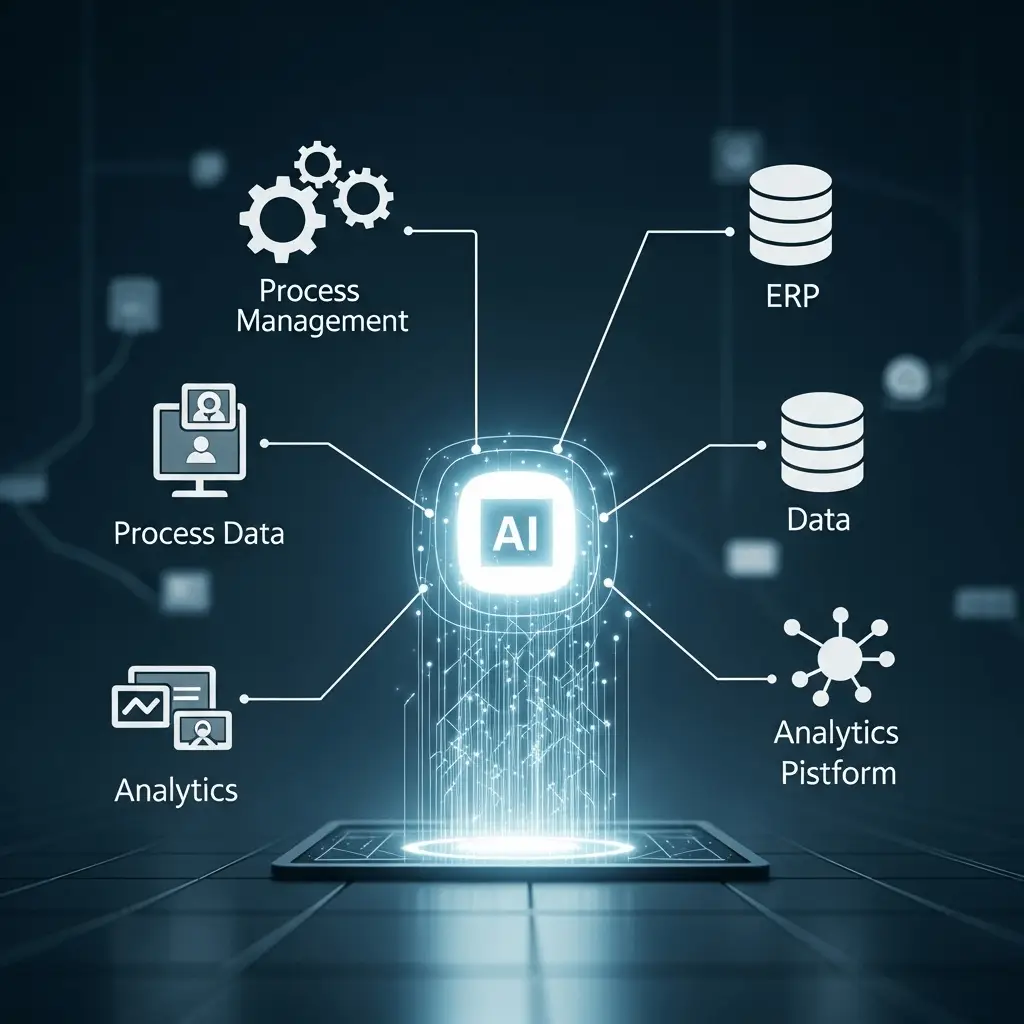
Successful enterprise AI deployments depend on a comprehensive technology stack that extends beyond individual algorithms. Modern implementations typically include:
– Enterprise AI platforms: Unified environments supporting machine learning operations (MLOps), model deployment, and lifecycle management
– Analytics infrastructure: Data pipelines supporting both predictive and prescriptive capabilities
– Cloud architecture: Flexible compute resources enabling rapid experimentation and scaling
– Governance frameworks: Systems ensuring responsible AI deployment with appropriate controls
– Workflow automation tools: Integration points connecting AI insights to business processes
– Data architecture: Structured and unstructured data repositories optimized for AI applications
Many enterprise AI projects fail precisely because organizations underestimate the infrastructure requirements. A fragmented tech stack, siloed data systems, and absent AI governance frameworks are among the top reasons why AI projects fail to scale beyond the pilot stage.
These components must work cohesively, with particular attention to data quality, as this remains the foundation for all AI initiatives.
Implementation Timeline & Enterprise Adoption Curve

Enterprise AI adoption follows a predictable maturity curve, though many organizations underestimate the timeline required for full deployment. Realistic implementation typically involves:
– Months 1-3: Assessment, use case identification, and strategy development
– Months 4-6: Pilot implementation with controlled scope
– Months 7-12: Initial scaling of successful use cases
– Year 2: Broader organizational integration and capability building
– Years 3-5: Advanced automation and intelligence deployment
Organizations must calibrate expectations accordingly, recognizing that transformation is an iterative process rather than a single implementation event. The enterprise AI failure rate remains high primarily because of timeline misalignment and premature scaling.
Step-by-Step Enterprise AI Implementation Framework

Executing Artificial Intelligence and enterprise digital transformation requires a structured methodology:
1. AI Readiness Assessment: Evaluate data infrastructure, technical capabilities, and organizational readiness
2. Use Case Prioritization: Identify high-impact applications with measurable ROI
3. Data Foundation Development: Establish data quality protocols and integration architecture
4. Governance Framework Creation: Develop policies for responsible AI deployment
5. Pilot Implementation: Deploy controlled experiments with clear success metrics
6. Talent Development: Build internal capabilities through training and strategic hiring
7. Scalable Deployment: Systematically expand successful use cases
8. Continuous Improvement: Implement feedback loops for ongoing optimization
This framework balances technological implementation with organizational change management, recognizing that transformation success depends equally on both dimensions.
Strategic Benefits for Enterprise Organizations
When properly implemented, AI delivers substantial value across multiple dimensions:
– Operational efficiency: 25-40% productivity improvements in routine processes
– Decision intelligence: Enhanced analysis capabilities through augmented analytics
– Customer experience personalization: Dynamic interaction models based on behavioral patterns
– Risk management: Predictive identification of potential issues
– Innovation acceleration: Rapid exploration of new product and service opportunities
– Competitive differentiation: Unique capabilities difficult for competitors to replicate
These benefits compound over time as AI systems accumulate institutional knowledge and expand their operational scope.
Advanced GEO & Semantic Optimization for AI Content
Organizations deploying AI must consider the growing importance of Generative Engine Optimization:
– Entity recognition infrastructure: Systems that identify and classify information objects
– Semantic network mapping: Relationship modeling between concepts and data elements
– Intent-based content architecture: Information organization aligned with user objectives
– Topical authority development: Systematic knowledge construction in specific domains
– Schema-driven data modeling: Structured representation of organizational knowledge
These capabilities ensure AI systems can effectively process, retrieve, and utilize organizational information assets.
Enterprise AI Mistakes to Avoid

Understanding why AI projects fail provides valuable implementation guidance. Common pitfalls include:
– Technology-first implementation: Focusing on algorithms before business problems
– Insufficient data governance: Neglecting data quality and integration requirements
– Isolation from business processes: Failing to connect AI insights to operational workflows
– Inadequate change management: Underestimating organizational adaptation requirements
– Misaligned metrics: Tracking technical rather than business outcomes
– Premature scaling: Expanding use cases before establishing proven foundations
Avoiding these mistakes requires disciplined planning and cross-functional collaboration.
Performance Measurement & AI ROI Tracking
Effective AI initiatives implement comprehensive measurement frameworks including:
– Automation efficiency: Process acceleration and error reduction metrics
– Decision quality improvement: Accuracy and consistency measurements
– Cost optimization: Direct expense reduction and resource reallocation
– Revenue impact: Growth attribution and opportunity expansion
– Strategic positioning: Competitive advantage and innovation indicators
– Time-to-value: Implementation velocity and benefit realization timing
These metrics should align directly with organizational strategic objectives, creating clear lines of sight between AI investments and business outcomes.
Conclusion
Artificial Intelligence and enterprise digital transformation represent the defining strategic imperative of the current business landscape. Organizations that implement structured approaches, realistic timelines, and comprehensive measurement frameworks position themselves for sustained competitive advantage. The enterprise AI failure rate serves as a reminder that technology alone cannot deliver transformation—success requires the thoughtful integration of people, processes, and technology within a coherent strategic vision.
FAQs
What is a realistic timeline for enterprise-wide AI adoption?
Most organizations require 3-5 years for comprehensive implementation, beginning with targeted use cases and gradually expanding as capabilities mature.
How should enterprises approach AI governance to ensure responsible deployment?
Effective governance combines technical controls, policy frameworks, ethical guidelines, and oversight mechanisms within a unified system of accountability.
What metrics best demonstrate AI ROI to executive stakeholders?
The most compelling metrics translate technical performance into business outcomes, particularly operational efficiency, cost reduction, revenue growth, and competitive differentiation.
How can organizations integrate AI with existing enterprise systems?
Integration succeeds through API-driven architecture, workflow mapping, data integration planning, and incremental implementation prioritizing high-value connection points.
What organizational structures best support long-term AI scalability?
Leading organizations typically implement federated models with centralized strategy and governance combined with distributed execution capabilities embedded within business units.