























































































Open Chat AI: 5 Ways It’s Revolutionizing Customer Support

In today’s hyper-competitive digital marketplace, customer expectations are at an all-time high. Users demand instant, accurate, and personalized support, 24/7. For many businesses, meeting this demand with human agents alone is a direct path to burnout and unsustainable costs.
This is where the strategic implementation of open chat ai becomes less of an option and more of a core competitive necessity. By leveraging advanced conversational models, inspired by breakthroughs like chatgpt, organizations can fundamentally transform their customer support ecosystem from a cost center into a powerful engine for engagement and loyalty.
Table of Contents
Core Tools & Infrastructure
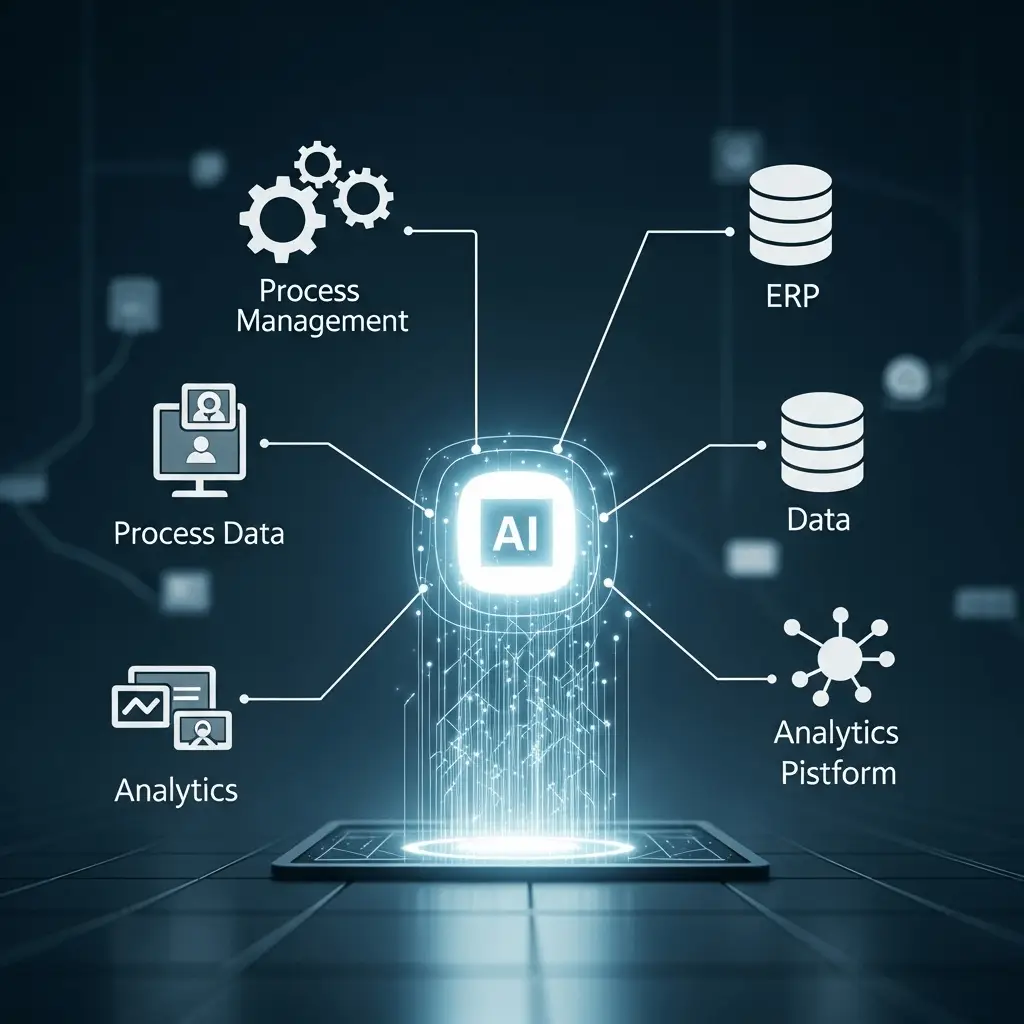
To effectively harness generative AI for customer support, you need a robust technological foundation. This isn’t about deploying a simple, keyword-based chatbot. True transformation relies on an integrated stack. At the core are Large Language Models (LLMs), the brains of the operation, accessed via APIs from providers like OpenAI, Google, or open-source alternatives.
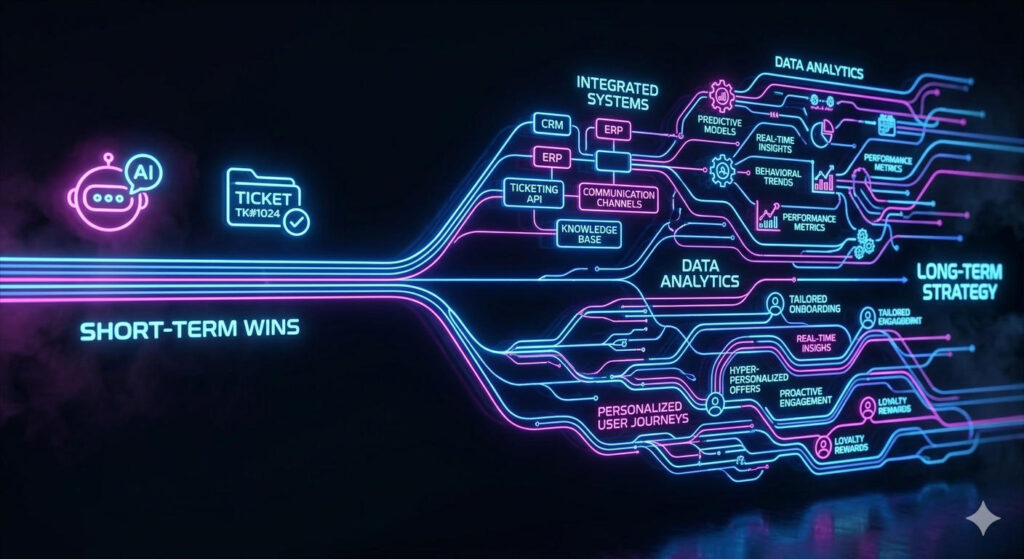
These models are then connected to your primary business systems—specifically your Customer Relationship Management (CRM) and help desk software (e.g., Salesforce Service Cloud, Zendesk, HubSpot). This integration is critical; it allows the AI to access customer history, order details, and previous support interactions, enabling context-aware and genuinely helpful conversations rather than generic, frustrating loops.
Implementation Timeline & Adoption Curve
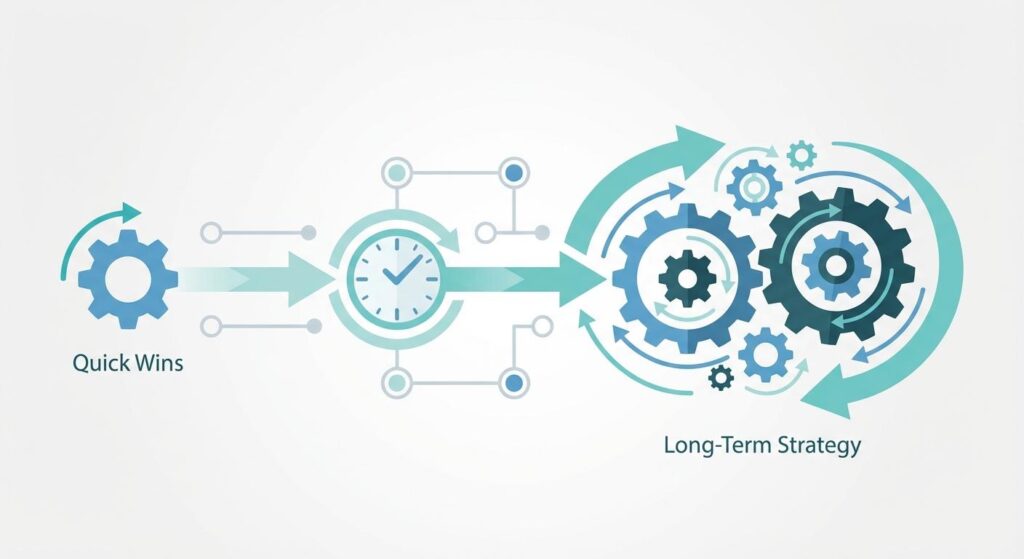
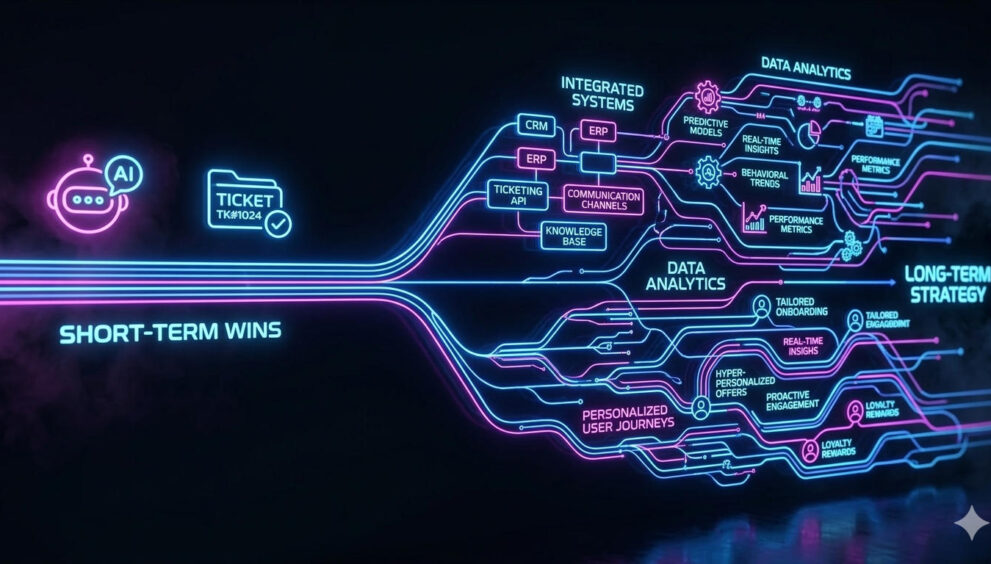
Adopting conversational AI is a journey, not a single event. A successful strategy balances immediate gains with long-term vision. The short-term “quick wins” typically involve deploying an AI-powered chatbot on your website to handle high-volume, low-complexity queries.
This can immediately deflect 20-30% of incoming tickets, freeing up human agents for more complex issues. This phase focuses on answering FAQs, tracking order statuses, and basic lead qualification.
The long-term, scalable strategy involves deeper workflow automation. This is where the AI moves beyond Q&A to become an active participant in problem resolution. This includes multi-step troubleshooting, processing returns or exchanges directly within the chat, and proactively offering solutions based on user behavior.
This advanced stage requires significant data preparation, continuous model fine-tuning, and a holistic integration strategy, but it delivers unparalleled efficiency and a superior customer experience (CX).
Step-by-Step Implementation Framework

A structured rollout is essential to maximize ROI and minimize disruption. Rushing into deployment without a clear plan is a recipe for failure. Follow this six-step framework for a successful integration.
- Assessment: Begin by analyzing your existing customer support data. Identify the most common query types, peak times, and the biggest pain points for both customers and agents. This data will define your AI’s initial focus.
- Prioritization: You can’t automate everything at once. Prioritize use cases based on volume, complexity, and potential impact. Start with high-volume, simple queries to build momentum and demonstrate value quickly.
- Preparation: This is the most critical step. Clean and structure your knowledge base. An AI is only as good as the data it’s trained on. Develop clear, concise, and accurate documentation, FAQs, and internal guides for the AI to learn from.
- Alignment: Ensure the AI’s personality and tone align with your brand voice. An open chat ai solution should feel like a natural extension of your brand, not a generic robot. This is where you can differentiate your CX from competitors using models similar to chatgpt.
- Deployment: Launch your AI in a phased approach. Start with an internal pilot for staff to test, followed by a beta with a small segment of customers. Use this feedback to refine responses and workflows before a full rollout.
- Measurement: Continuously monitor performance against your predefined KPIs. Track metrics like ticket deflection rate, first-contact resolution, and customer satisfaction (CSAT) scores to prove ROI and identify areas for improvement.
Strategic Benefits
The “why” behind this transformation is compelling. The benefits extend far beyond simple cost savings. First is 24/7 Instantaneous Support, which directly meets modern consumer expectations. Second is Enhanced Agent Productivity; by automating repetitive tasks, human agents can focus on high-value, empathetic interactions that build customer relationships.
Third, you achieve Unprecedented Scalability, handling thousands of concurrent conversations without a linear increase in headcount. Fourth is the benefit of Data-Driven Insights; every AI interaction is a data point, revealing trends in customer issues and product feedback. Finally, the result is a Superior Customer Experience, where customers get fast, accurate answers, leading to higher CSAT and loyalty.
Advanced GEO & Semantic Optimization
For your AI to perform at an elite level, it needs a semantically rich content ecosystem to draw from. This is a core principle of Generative Engine Optimization (GEO).
It means structuring your public and internal knowledge bases not as flat documents, but as a network of interconnected entities. By using clear schemas and topical mapping, you create an “entity-based architecture” where your AI understands the relationships between concepts—like how a “billing issue” relates to a “subscription plan” and a “payment method.” This semantic layering allows the AI to answer complex, multi-part questions accurately. Furthermore, ensuring content freshness and aligning help articles with user intent are crucial for both SEO and AI performance.
Mistakes to Avoid

Many AI support projects falter due to predictable missteps. The most critical mistake is neglecting the human-in-the-loop; there must always be a seamless escalation path to a human agent for complex or sensitive issues. Another common error is using poor or outdated training data, which leads to inaccurate or “hallucinated” answers that destroy customer trust. Others include ignoring brand voice, resulting in a generic and impersonal experience, and failing to integrate with backend systems, which leaves the AI unable to perform meaningful actions and turns it into a glorified FAQ page.
Performance Measurement & ROI Tracking
To justify continued investment, you must track the right metrics. Go beyond vanity numbers and focus on business impact. Key Performance Indicators (KPIs) include Ticket Deflection Rate (how many queries are resolved without human intervention), First-Contact Resolution (FCR) for AI-led interactions, and Average Resolution Time. Crucially, measure the impact on Customer Satisfaction (CSAT) and Customer Effort Score (CES) through post-chat surveys. On the cost side, calculate the reduction in cost-per-interaction and the overall impact on agent productivity and retention to build a comprehensive ROI model.
Conclusion
The shift towards AI-driven customer support is a strategic imperative for any business focused on engagement and efficiency. By embracing a structured, thoughtful approach, you can harness the power of open chat ai to not only meet customer expectations but exceed them. This isn’t about replacing humans; it’s about augmenting them, creating a symbiotic system where technology like chatgpt handles the routine, allowing your team to handle the relationships. A long-term, strategic vision is the key to unlocking a truly revolutionary customer experience.
FAQs
1. How long does it take to see a tangible ROI from implementing AI in customer support?
You can see initial ROI in as little as 30-60 days from “quick wins” like ticket deflection. A more substantial ROI from deep workflow automation and improved CSAT typically becomes evident within 6-9 months as the system is refined.
2. What is the most common challenge businesses face during integration?
The primary challenge is often data preparation. Many businesses discover their existing knowledge base is disorganized, outdated, or incomplete, requiring a significant upfront effort to clean and structure it before the AI can be effective.
3. How do you measure the ROI of an improved customer experience?
Beyond direct cost savings, ROI is measured through proxy metrics for loyalty: tracking changes in customer churn rate, increases in Net Promoter Score (NPS), and monitoring the lifetime value (LTV) of customer cohorts who interact with the AI-powered support.
4. How complex is it to integrate conversational AI with existing CRM and help desk platforms?
Most modern AI platforms are designed with integration in mind and offer pre-built connectors or robust APIs for major systems like Salesforce, Zendesk, and HubSpot. The complexity depends on the depth of integration required, but basic connections are typically straightforward for a development team.
5. Is an AI-powered support system scalable for a rapidly growing business?
Yes, this is one of its primary advantages. An AI system’s capacity is not tied to headcount. It can handle massive fluctuations in query volume, from a viral marketing campaign to seasonal peaks, with consistent performance, making it ideal for scalable growth.