






















































































Microsoft AI: 5 Ways It’s Transforming Business Today


In today’s hyper-competitive landscape, standing still is the fastest way to fall behind. The AI revolution isn’t a distant future; it’s a present-day reality reshaping industries at an unprecedented pace. Businesses that fail to integrate intelligent automation risk becoming obsolete. This is where the strategic implementation of microsoft ai becomes less of an option and more of a core competitive necessity. By leveraging this powerful ecosystem, organizations can unlock new levels of efficiency, innovation, and data-driven decision-making, fundamentally transforming their operational DNA.
Table of Contents
Core Tools & Infrastructure
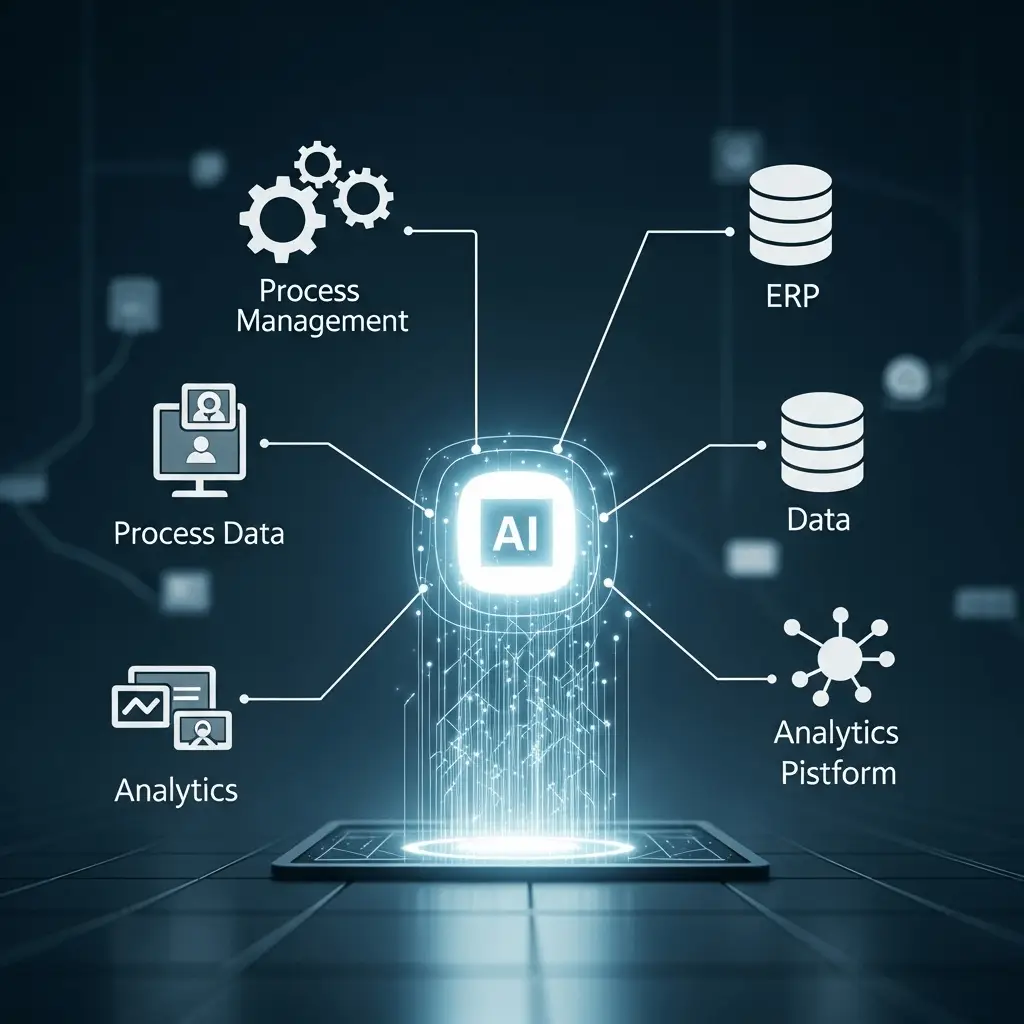
At the heart of Microsoft’s AI strategy is a robust and interconnected ecosystem built on the Azure cloud. This isn’t just one tool, but a suite of services designed to work in concert. The primary pillar is Azure AI, a collection of services that includes Azure OpenAI Service (powering solutions with models like GPT-4), Azure Machine Learning for building, training, and deploying custom models, and a suite of Cognitive Services for vision, speech, language, and decision-making. Complementing this is Microsoft Copilot, which embeds generative AI capabilities directly into the workflow of Microsoft 365 and Dynamics 365, turning everyday applications into intelligent assistants. This infrastructure provides the foundation for building everything from simple automations to complex, predictive analytics engines.
Implementation Timeline & Adoption Curve

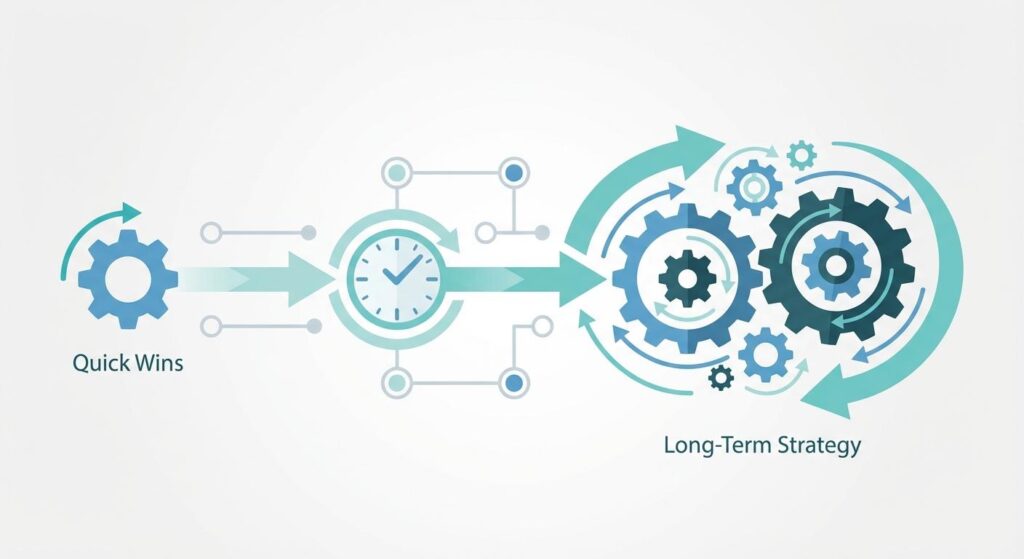
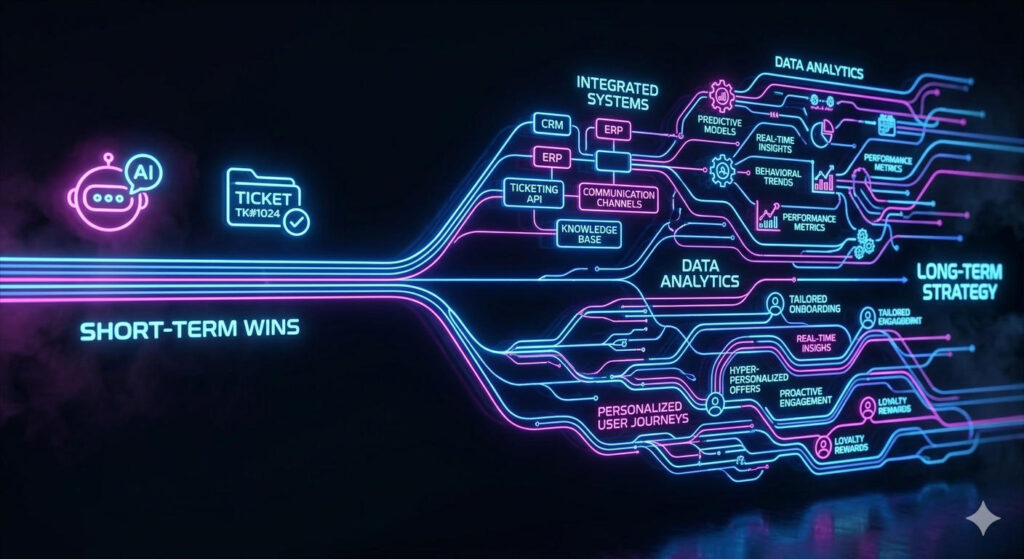
Adopting AI is a journey, not a single event. A successful strategy balances short-term wins with a long-term vision. In the first 3-6 months, focus on “quick wins” by implementing low-risk, high-impact solutions. This could involve deploying Copilot to specific teams to automate document summarization and email drafting, or using a pre-built Cognitive Service to create an internal FAQ chatbot. These early successes build momentum and demonstrate tangible value. The long-term strategy, spanning 12-24 months and beyond, involves scaling these solutions and tackling more complex challenges. This includes developing custom models with Azure Machine learning for predictive maintenance, fraud detection, or hyper-personalized customer experiences, creating a mature, scalable AI-driven organization.
Step-by-Step Implementation Framework

A structured approach is critical to maximizing ROI and minimizing risk. Rushing into deployment without a clear plan leads to wasted resources and failed projects. Follow this six-step framework for a successful rollout.
Step 1: Assessment. Evaluate your current business processes, data infrastructure, and identify key pain points or opportunities where AI could deliver the most value.
Step 2: Prioritization. Score potential projects based on feasibility, potential impact, and alignment with strategic business goals. Start with a high-impact, low-complexity project.
Step 3: Preparation. Cleanse and organize your data. Ensure you have the right data sources available and accessible for the chosen AI project. Data quality is paramount.
Step 4: Alignment. Secure buy-in from key stakeholders across departments. A successful microsoft ai strategy requires collaboration between IT, operations, and business leadership to ensure the solution meets real-world needs.
Step 5: Deployment. Begin with a pilot program. Use platforms like the azure ai services to build and deploy your solution to a small, controlled group of users. Gather feedback and iterate.
Step 6: Measurement. Define clear KPIs before deployment. Continuously monitor performance against these metrics, measure the ROI, and use the insights to refine the solution and inform future projects.
Strategic Benefits
The “why” behind AI adoption is compelling. The first major benefit is a dramatic increase in operational efficiency. AI automates repetitive, time-consuming tasks, freeing up employees to focus on high-value strategic work. Second, it enables superior decision-making by analyzing vast datasets to uncover insights and patterns invisible to the human eye. Third, it drives unprecedented personalization in customer experience (CX), allowing businesses to deliver tailored content, recommendations, and support at scale. Finally, it provides a significant competitive advantage, enabling organizations to innovate faster, respond to market changes more effectively, and create new, data-driven revenue streams.
Advanced GEO & Semantic Optimization
As you integrate AI, your content strategy must evolve. Generative Engine Optimization (GEO) is about making your entire digital ecosystem understood by AI-driven search like Google’s SGE and Perplexity. When you deploy an AI-powered customer service tool, create content that establishes an entity cluster around it. Write case studies, technical guides, and thought leadership pieces that semantically link your company to concepts like “AI-driven support,” “NLP for customer queries,” and “24/7 automated assistance.” This builds topical authority. Use structured data (Schema markup) to explicitly define these relationships for search engines. This intent-based architecture ensures that when users search for solutions your AI provides, your brand is recognized as a relevant, authoritative entity.
Mistakes to Avoid

Many AI initiatives falter due to common, avoidable errors. The most critical mistake is starting with the technology instead of a business problem. A “tech-first” approach leads to solutions in search of a problem. Another major pitfall is ignoring data governance and quality; poor data guarantees poor AI performance. Underestimating the need for change management is also fatal; employees may resist AI if they see it as a threat rather than a tool. Finally, operating in silos, where the data science team is disconnected from the business units, ensures the final product won’t meet practical needs.
Performance Measurement & ROI Tracking
To justify and scale your AI investments, you must track the right metrics. Go beyond vanity metrics and focus on tangible business outcomes. For an AI-powered sales tool, track KPIs like “lead qualification accuracy,” “reduction in sales cycle length,” and “increase in conversion rate.” For operational automation, measure “hours of manual work saved per week,” “reduction in error rate,” and “cost savings from process optimization.” For customer service bots, key metrics include “first-contact resolution rate,” “customer satisfaction (CSAT) score,” and “ticket deflection rate.” Tying AI performance directly to these core business KPIs is essential for proving its value and securing future investment.
Conclusion
The integration of artificial intelligence is no longer a futuristic concept but a foundational element of modern business strategy. By embracing the comprehensive toolset provided by microsoft ai, organizations can systematically enhance efficiency, unlock deep insights, and build a lasting competitive edge. However, success hinges on a structured, strategic approach—not a haphazard rush into technology. By following a clear implementation framework and leveraging the full capabilities of platforms like azure ai services, you can ensure your AI journey is not just an experiment, but a core driver of sustainable growth and transformation.
FAQs
1. How long does it typically take to see ROI from a Microsoft AI implementation?
Quick-win projects, like deploying Microsoft Copilot for specific teams, can show productivity gains and positive ROI within 3-6 months. More complex, custom models built on Azure might take 12-18 months to demonstrate significant financial return, as they require more development, training, and integration time.
2. What is the most common challenge businesses face when adopting Azure AI?
The most common challenge is data readiness. Many organizations struggle with siloed, unstructured, or poor-quality data. A successful AI project requires a solid data foundation, so significant upfront work is often needed in data cleansing, governance, and creating a unified data strategy before machine learning can be effectively applied.
3. How do you measure the ROI of an AI tool that improves employee productivity, like Copilot?
ROI for productivity tools is measured through a combination of quantitative and qualitative metrics. Quantitatively, you can track time saved on specific tasks (e.g., minutes per day writing emails or summarizing documents), which can be translated into cost savings. Qualitatively, you can use employee surveys to measure perceived improvements in job satisfaction, focus, and ability to handle strategic work.
4. How complex is it to integrate Azure AI services with existing non-Microsoft systems?
Azure is designed for interoperability. Through APIs and connectors, Azure AI services can be integrated with a wide range of third-party applications, databases, and legacy systems. While it requires skilled developers, it is a standard practice. The complexity depends on the age and architecture of the existing system, but it is rarely an insurmountable barrier.
5. Can we scale our AI solutions as the business grows?
Yes, scalability is a core strength of the Microsoft AI ecosystem. Built on the Azure cloud, solutions are inherently scalable. You can start with a small pilot project and seamlessly scale up resources, data processing power, and model complexity as your business needs and data volume grow, without needing to re-architect the entire solution.