





















































































Google Cloud AI: 5 Ways It Transforms Business Efficiency


Google Cloud AI: 5 Ways It Transforms Business Efficiency
In today’s hyper-competitive digital landscape, standing still is the new falling behind. Businesses are no longer just competing on product or price; they are competing on intelligence. The ability to automate, predict, and optimize at scale is the new strategic high ground. This is where the transformative power of google cloud ai becomes not just an advantage, but a necessity. By leveraging the robust infrastructure of the Google Cloud AI platform, organizations can unlock unprecedented levels of efficiency, moving from reactive problem-solving to proactive, data-driven strategy.
Core Tools & Infrastructure
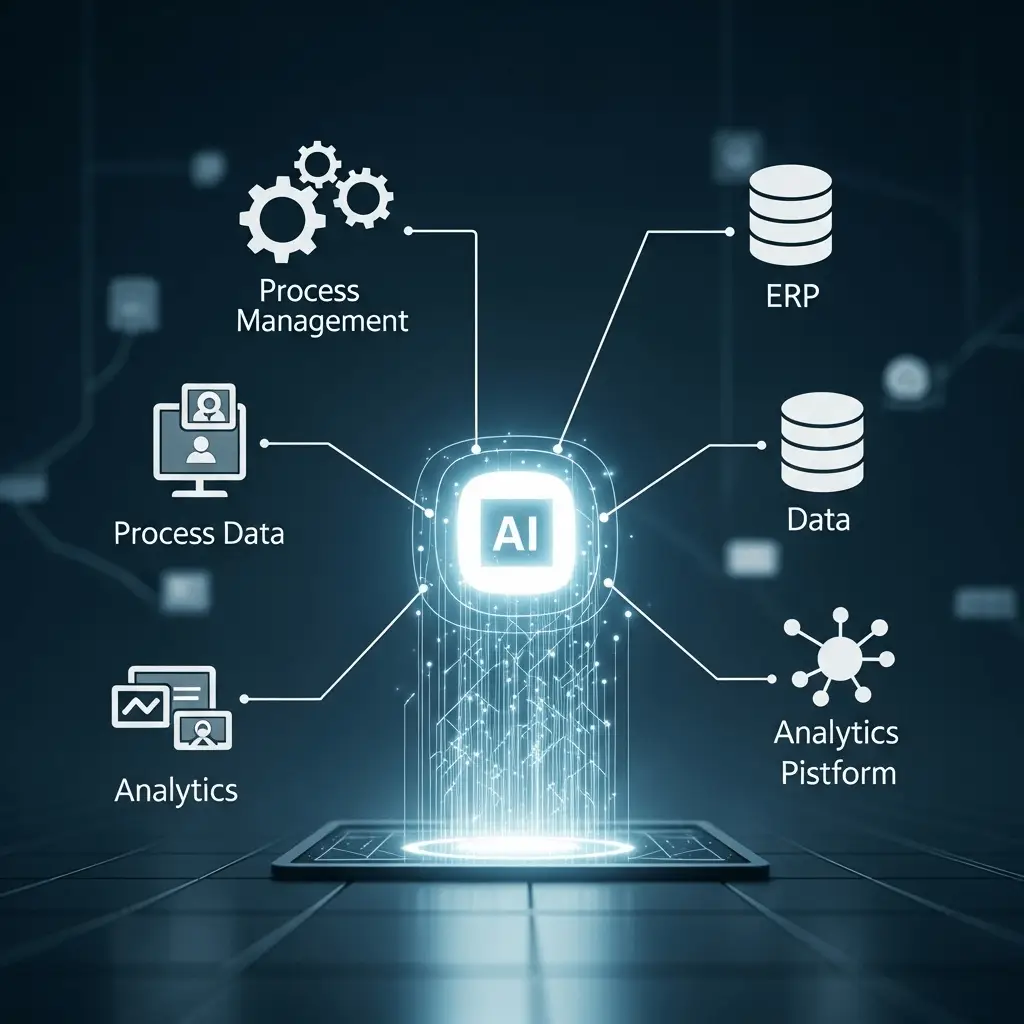
At the heart of Google’s AI ecosystem is a suite of powerful, integrated tools designed for developers, data scientists, and enterprise users. The core infrastructure is built on Google Cloud Platform (GCP), ensuring global scale, security, and reliability. The flagship offering, Vertex AI, is a unified MLOps platform that allows teams to build, deploy, and scale machine learning models faster. It integrates Google’s best-in-class technologies, including AutoML for building high-quality models with minimal expertise, and custom training for full control. This is complemented by services like BigQuery ML, which enables users to create and execute machine learning models directly within their data warehouse using simple SQL queries, drastically lowering the barrier to entry for predictive analytics.
Implementation Timeline & Adoption Curve

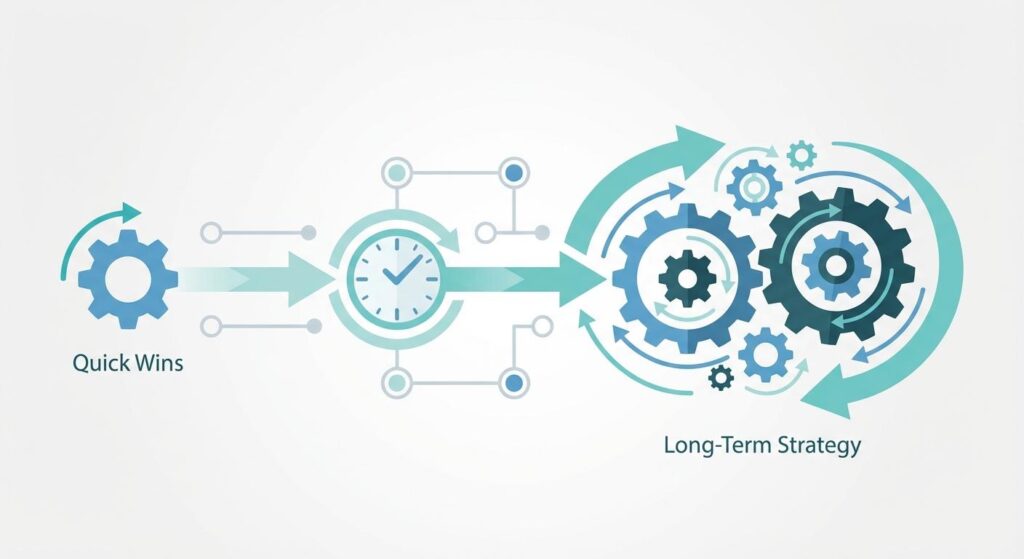
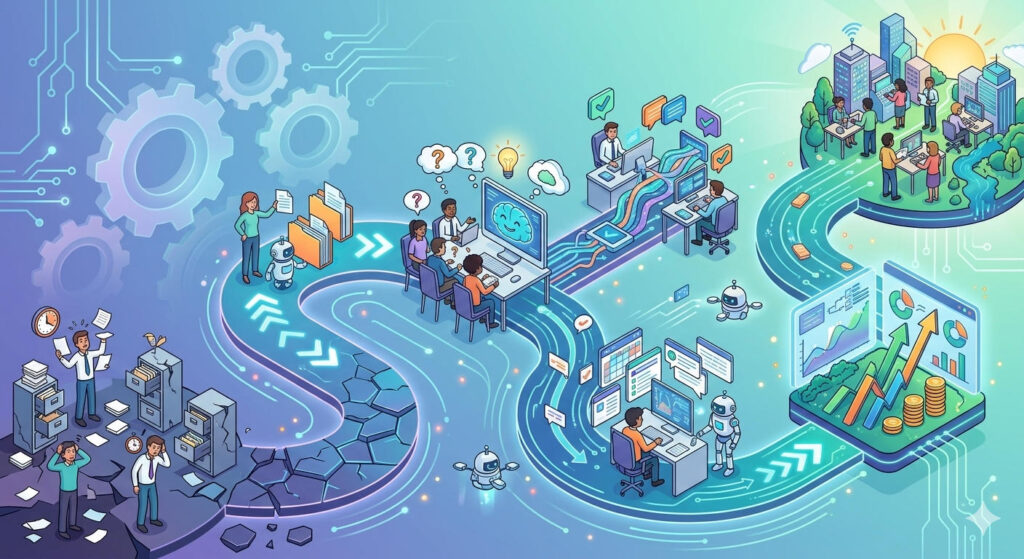
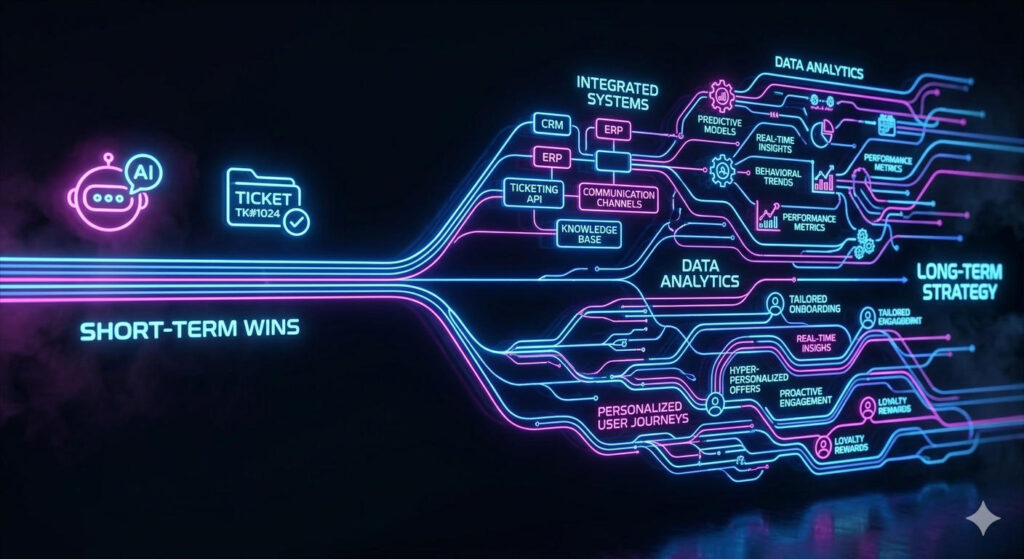
Adopting cloud AI is not a monolithic event but a strategic journey. The adoption curve can be broken down into two distinct phases.
Short-Term Quick Wins (3-6 Months): The initial phase focuses on leveraging pre-trained APIs for immediate impact. This includes implementing the Cloud Vision API for image analysis, the Natural Language API for text sentiment analysis, or the Speech-to-Text API for transcribing customer service calls. These solutions require minimal custom development and can deliver rapid ROI by automating specific, well-defined tasks.
Long-Term Scalable Strategy (12-24+ Months): This phase involves building custom machine learning models on Vertex AI to solve complex, core business challenges. This requires a deeper investment in data pipelines, model training, and MLOps practices. The goal is to develop a proprietary competitive moat—for instance, a custom demand forecasting model that reduces inventory costs by 20% or a predictive maintenance system that minimizes operational downtime.
Step-by-Step Implementation Framework

A structured framework is critical for a successful AI initiative. Rushing into deployment without a clear plan leads to wasted resources and failed projects. Follow these six steps for a methodical and effective implementation.
- Assessment: Identify the most pressing business challenges and operational bottlenecks. Where can intelligent automation or predictive insights deliver the most value?
- Prioritization: Score potential projects based on feasibility, potential ROI, and strategic alignment. Start with a high-impact, low-complexity pilot project to build momentum.
- Preparation: This is the most crucial step. Consolidate, clean, and govern your data. High-quality models are built on high-quality data; garbage in, garbage out.
- Alignment: Ensure IT, data science, and business units are aligned. Define clear objectives, success metrics, and roles for a cohesive strategy using google cloud ai.
- Deployment: Utilize the Google Cloud AI platform to build, train, and deploy your model. Start with a limited rollout to a control group to validate performance before scaling.
- Measurement: Continuously monitor the model’s performance against the predefined KPIs. Implement a feedback loop for ongoing refinement and retraining.
Strategic Benefits
Integrating Google’s AI capabilities yields five core strategic benefits that fundamentally reshape business operations:
- Hyper-Automation of Workflows: Move beyond simple task automation to intelligently orchestrate complex, end-to-end business processes, from supply chain logistics to financial reconciliation.
- Data-Driven Decision Intelligence: Embed predictive analytics directly into operational dashboards, empowering leaders to make forward-looking decisions based on probable outcomes, not just historical data.
- Enhanced Customer Experience (CX): Deploy AI-powered chatbots, personalized recommendation engines, and sentiment analysis to create seamless, proactive, and highly individualized customer journeys.
- Accelerated Innovation: Use generative AI and other advanced models to speed up R&D cycles, simulate product performance, and uncover novel solutions to long-standing problems.
- Scalable Operational Resilience: Build systems that can automatically adapt to changing market conditions, predict supply chain disruptions, and optimize resource allocation in real-time.
Advanced GEO & Semantic Optimization
To establish topical authority in the AI space, content strategy must mirror the technology’s own intelligence. For Generative Engine Optimization (GEO), we move beyond keywords to entity clustering. This means creating a content ecosystem where “Google Cloud AI” is the parent entity, supported by child entity content on “Vertex AI,” “BigQuery ML,” “TensorFlow,” and “AutoML.” Each piece should be semantically layered, interlinking to create a rich topical map that signals deep expertise to AI-driven search systems like Google’s Search Generative Experience (SGE). An intent-based architecture ensures that content for each entity answers specific user questions, from “what is Vertex AI” (informational) to “Vertex AI pricing” (transactional), capturing the full spectrum of user intent.
Mistakes to Avoid

Navigating an AI transformation is fraught with potential pitfalls. Avoid these common mistakes to ensure a smooth and successful implementation:
- Starting with Technology, Not a Problem: Adopting AI for its own sake without a clear business problem to solve is a recipe for failure.
- Ignoring Data Governance: Poor data quality and lack of a coherent data strategy will cripple any AI initiative before it begins.
- Underestimating the Skills Gap: Assuming your current team can manage complex MLOps without proper training or hiring specialized talent.
- Operating in Silos: A successful AI strategy requires deep collaboration between technical teams and business stakeholders.
- Neglecting Change Management: Failing to prepare the organization for how AI will augment roles and change workflows can lead to internal resistance and poor adoption.
Performance Measurement & ROI Tracking
The impact of AI must be quantifiable. Track a blend of operational and financial KPIs to demonstrate value. Key metrics include: Process Cycle Time Reduction (e.g., time to approve a loan), Forecast Accuracy Improvement, Customer Satisfaction (CSAT) & Net Promoter Score (NPS) lift from improved CX, Reduction in Operational Costs, and ultimately, the direct impact on revenue and profitability. Tying model performance directly to these business outcomes is critical for securing ongoing investment and executive buy-in.
Conclusion
The integration of artificial intelligence is no longer a futuristic concept; it is a present-day imperative for business efficiency and survival. By methodically implementing tools from google cloud ai, organizations can build a formidable competitive advantage. A successful transformation, however, hinges on a strategic, problem-focused approach that leverages the full power of the Google Cloud AI platform. It is a long-term journey of continuous learning, measurement, and optimization that redefines what’s possible, driving a new era of intelligent enterprise.
FAQs
1. How long does it take to see a tangible ROI from a Google Cloud AI implementation?
For projects using pre-trained APIs (e.g., Vision AI, NLP API), tangible ROI can often be seen within 3-6 months. For custom models built on Vertex AI addressing core business logic, a 12-18 month timeframe is more realistic to account for data preparation, training, and deployment.
2. What is the most common challenge businesses face when adopting Google Cloud AI?
The most common challenge is not technical but organizational: data readiness and quality. Many businesses underestimate the effort required to clean, consolidate, and structure their data, which is the essential foundation for any successful machine learning model.
3. How can we measure the ROI of an AI project that enhances customer experience?
Measure secondary metrics that are directly impacted by CX. This includes tracking changes in Customer Lifetime Value (CLV), churn rate reduction, increases in Net Promoter Score (NPS) or Customer Satisfaction (CSAT) scores, and conversion rate improvements on personalized offers.
4. How complex is it to integrate Google Cloud AI with our existing legacy systems?
Complexity varies. Google Cloud provides a rich set of APIs and connectors (e.g., Apigee for API management) that facilitate integration. For modern, API-driven systems, integration is relatively straightforward. For older, monolithic legacy systems, it may require building a middleware layer or a more phased data migration strategy.
5. Is the Google Cloud AI platform scalable for a large enterprise in the long term?
Absolutely. The platform is built on Google’s global infrastructure, the same infrastructure that powers Google Search and YouTube. It is designed for massive scalability, able to handle petabytes of data and millions of prediction requests per second, making it suitable for even the largest enterprise needs.