






















































































Best AI Tools for Small Business in 2026: 12 Picks That Save Time


Why the Best AI Tools for Small Business Matter in 2026
Finding the best AI tools for small business is no longer optional in 2026 — it is how lean teams compete with much larger companies. The right AI stack lets a five-person business handle marketing, customer support, bookkeeping, and content at a scale that used to require dozens of employees. This guide breaks down twelve tools that actually save time, organized by what job they do, so you can build a practical AI workflow without wasting money on hype.
Table of Contents
- AI Writing & Content Tools
- Marketing & Social Media
- Customer Support & Sales
- Operations & Productivity
- How to Choose the Right Tools
AI Writing & Content Tools
Content is usually the first place small teams feel stretched. These tools cut writing time without making your brand sound robotic.
1. ChatGPT & Claude
General-purpose assistants for drafting emails, summarizing documents, brainstorming, and rewriting copy. Most small businesses get the highest return here because one subscription covers dozens of daily tasks.
2. Jasper
Built specifically for marketing copy, with brand-voice training so your output stays consistent across blog posts, ads, and product descriptions.
3. Grammarly
Catches tone, clarity, and grammar issues in real time across email, docs, and your CMS — a low-cost layer that keeps everything you publish polished.
Marketing & Social Media
4. Canva Magic Studio
AI-assisted design for social posts, thumbnails, and simple video. It removes the need for a dedicated designer on routine graphics.
5. Buffer AI Assistant
Generates and schedules social content, then suggests the best posting times based on your audience activity.
6. Surfer SEO
Helps your blog content actually rank by analyzing top results and guiding structure, keywords, and length as you write.
Customer Support & Sales
7. Intercom Fin
An AI support agent that resolves common questions instantly and hands off complex issues to a human, cutting response times dramatically.
8. Tidio
An affordable chatbot for small storefronts that handles FAQs, order status, and lead capture around the clock.
9. Apollo.io
AI-driven prospecting and outreach that helps small sales teams find and contact the right leads without a large CRM budget.
Operations & Productivity
10. Notion AI
Turns your workspace into a knowledge base that can summarize notes, draft docs, and answer questions about your own content.
11. Zapier & n8n
Automation platforms that connect your apps so repetitive tasks — like logging leads or sending follow-ups — run themselves. For a deeper look, see our guide on building an AI-driven operations workflow.
12. Fathom
Records, transcribes, and summarizes meetings automatically, so nobody loses an hour writing notes.
How to Choose the Right AI Tools for Your Small Business
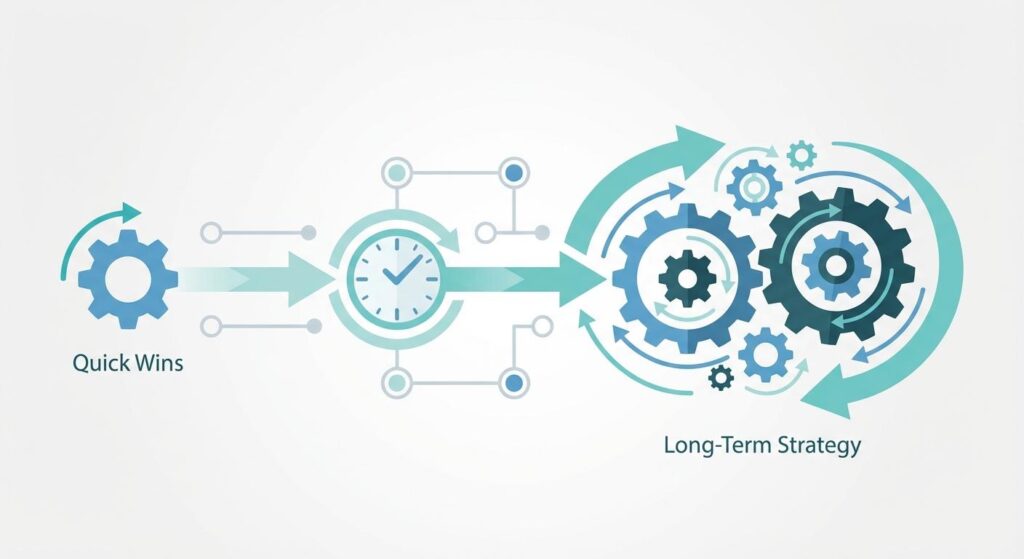
Do not adopt all twelve at once. Start with your single biggest time drain — usually content or customer support — and add one tool there. Measure the hours saved over a month, then expand. According to McKinsey research on AI adoption, businesses that integrate AI into a few core workflows see far better returns than those that spread thin across many tools.
The best AI tools for small business in 2026 are the ones your team will actually use every day. Pick deliberately, train your people, and let the time savings compound.
Frequently Asked Questions
What is the best AI tool for a small business on a budget?
A single ChatGPT or Claude subscription paired with the free tier of Canva covers most early needs at minimal cost.
Are AI tools safe for customer data?
Choose tools with clear data-privacy policies and business-tier plans that do not train on your inputs. Always review terms before connecting customer data.